Showing posts with label Pesticides. Show all posts

Tuesday, June 19, 2018

Straight-Foward Truth on GMO Safety [Video Lecture]

GM Watch | June 19, 2018 | Claire Robinson

Watch lecture ten of our independent lecture series to learn that Cornell is indeed misleading us on the safety of GMOs (among a host of other topics). (Time 1:01:27)


Sunday, May 27, 2018

Monsanto in Epic Fail with Attempted Attack on Global Glyphosate Study

Sustainable Pulse | May 22, 2009

The peer-reviewed accepted manuscripts from the pilot phase of the Global Glyphosate Study were revealed last Wednesday in a Press Conference at the European Parliament.


The results of the short-term pilot study showed that glyphosate-based herbicides (GBHs) were able to alter certain important biological parameters in rats, mainly relating to sexual development, genotoxicity and the alteration of the intestinal microbiome, at the ‘safe’ level of 1.75 mg/kg/day set by the U.S. Environmental Protection Agency (EPA).

As is normal practice for Monsanto, their Public Relations department was soon in action to try and crush the scientists involved and the study results, which could cause major damage to the product that supports their whole business model – the glyphosate-based herbicide Roundup.
However, this time their PR campaign against the Study was only met with contempt and disdain from journalists, politicians, scientists and the public in countries across Europe.
Urban Dictionary – Epic Fail: A mistake of such monumental proportions that it requires its own term in order to sucessfully point out the unfathomable shortcomings of an individual or group.
Monsanto’s epic fail began with their comments in The Guardian newspaper:

Scott Partridge, Monsanto’s VP for global strategy told the Guardian: “The Ramazzini Institute is an activist organisation with an agenda that they have not disclosed as part of their crowdfunding efforts. They wish to support a ban on glyphosate and they have a long history of rendering opinions not supported by regulatory testing agencies.”

There are many things that are ‘interesting’ about Scott Partridge’s comment:

Epic Fail #1: Monsanto attacked the wrong Institute

The excellent Guardian article was mainly discussing a study on the microbiome of the rats, hence the title: “Glyphosate shown to disrupt microbiome ‘at safe levels’, study claims”. This study was actually carried out at Icahn School of Medicine at Mount Sinai in New York on samples provided by The Ramazzini Institute.

The truth is that Monsanto has never been faced with an independent study on glyphosate and glyphosate-based herbicides, in which multiple Institutions and Universities are involved. They are used to attacking one single scientist or a small institution.

The Global Glyphosate Study involves The Ramazzini Institute, the University of Bologna (Faculty of Agriculture, Veterinary Science and Biostatistics) the Genoa Hospital San Martino, the Italian National Institute of Health, the Icahn School of Medicine at Mount Sinai in New York and the George Washington University.

Monsanto have now shown that they will struggle to attack this group of well-respected Institutions!

Epic Fail #2: Monsanto suggests expert cancer scientists are activists

Monsanto’s Mr. Partridge was obviously having a bad day, as he also suggested that “The Ramazzini Institute is an activist organization”. This could not be further from the truth. In fact they are expert scientists who have been protecting public health for over 40 years.

The activities of the Ramazzini Institute (RI) focus primarily on the experimental identification and quantification of carcinogenic risks and on the evaluation of the efficacy and safety of drug therapies and active ingredients that may be used to prevent the development and/or progression of cancer.

The Ramazzini Institute’s long-term studies on Formaldehyde, Vinyl Chloride and Benzene, amongst others have led to global regulatory change on these chemicals.

The RI study design closely mirrors the human condition, in which persons may be exposed to agents in all phases of life for varying lengths of time. A distinctive characteristic of most RI carcinogenicity studies is that rodents are treated from prenatal life and kept under observation until natural death or at least 130 weeks of age. This lifespan protocol is in contrast with most laboratories where rodents are treated starting from adulthood and sacrificed at 110 weeks of age (representing about 2/3 of the lifespan) and corresponding to 60-65 years in humans. This practice means that the researchers miss a significant proportion of cancers induced by early exposure during pregnancy and that might show up in old age.

Sorry Mr. Partridge and Monsanto, you cannot change the truth!

Epic Fail #3: Monsanto claims no link between glyphosate and cancer…off topic

Monsanto’s Mr. Partridge continued by telling the Guardian; “All the research to date has demonstrated that there is no link between glyphosate and cancer.”

Does this not seem to be a bit off topic Mr. Partridge? There is no suggestion in the short-term studies, which he was being asked about, that glyphosate is linked to cancer.

However, if Monsanto really want to bring up this topic, we would suggest they have a chat to the International Agency for Research on Cancer (IARC), who classified glyphosate as a “probable human carcinogen” in 2015.

Oh…..I forgot they are currently also trying to campaign against IARC too, including an attempt to stop the U.S. government from funding the Agency. I wonder why that is…..

It is time that we all stop Monsanto in their tracks and support the Global Glyphosate Study, which is being funded by the public worldwide. You can help them by donating here.

Sunday, May 13, 2018

Weedkiller products more toxic than their active ingredient, tests show

The Guardian | May 8, 2018 | Carey Gillam

After more than 40 years of widespread use, new scientific tests show formulated weedkillers have higher rates of toxicity to human cells

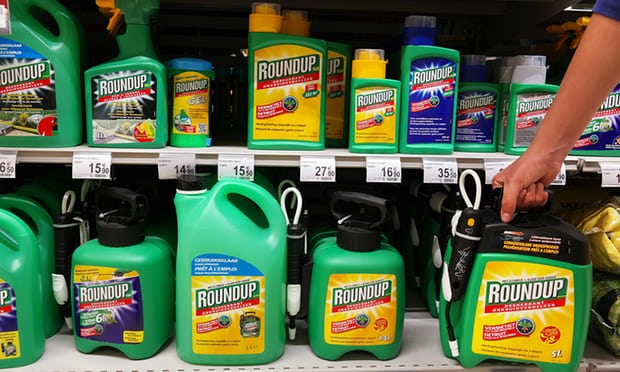
Formulated weedkillers, like Monsanto’s widely-used Roundup, leave residues in food and water, as well as public spaces. Photograph: Rene van den Berg/Alamy Stock Photo
US government researchers have uncovered evidence that some popular weedkilling products, like Monsanto’s widely-used Roundup, are potentially more toxic to human cells than their active ingredient is by itself.

These “formulated” weedkillers are commonly used in agriculture, leaving residues in food and water, as well as public spaces such as golf courses, parks and children’s playgrounds.

The tests are part of the US National Toxicology Program’s (NTP) first-ever examination of herbicide formulations made with the active ingredient glyphosate, but that also include other chemicals. While regulators have previously required extensive testing of glyphosate in isolation, government scientists have not fully examined the toxicity of the more complex products sold to consumers, farmers and others.

Monsanto introduced its glyphosate-based Roundup brand in 1974. But it is only now, after more than 40 years of widespread use, that the government is investigating the toxicity of “glyphosate-based herbicides” on human cells.

The NTP tests were requested by the Environmental Protection Agency (EPA) after the International Agency for Research on Cancer (IARC) in 2015 classified glyphosate as a probable human carcinogen. The IARC also highlighted concerns about formulations which combine glyphosate with other ingredients to enhance weed killing effectiveness. Monsanto and rivals sell hundreds of these products around the world in a market valued at roughly $9bn.

Mike DeVito, acting chief of the National Toxicology Program Laboratory, told the Guardian the agency’s work is ongoing but its early findings are clear on one key point. “We see the formulations are much more toxic. The formulations were killing the cells. The glyphosate really didn’t do it,” DeVito said. 

A summary of the NTP work stated that glyphosate formulations decreased human cell “viability”, disrupting cell membranes. Cell viability was “significantly altered” by the formulations, it stated.
DeVito said the NTP first-phase results do not mean the formulations are causing cancer or any other disease. While the work does show enhanced toxicity from the formulations, and show they kill human cells, the NTP appears to contradict an IARC finding that glyphosate and/or its formulations induce oxidative stress, one potential pathway toward cancer. The government still must do other testing, including examining any toxic impact on a cell’s genetic material, to help add to the understanding of risks, according to DeVito.

The NTP work informs a global debate over whether or not these glyphosate-based weedkilling chemical combinations are endangering people who are exposed. More than 4,000 people are currently suing Monsanto alleging they developed cancer from using Roundup, and several European countries are moving to limit the use of these herbicides.

“This testing is important, because the EPA has only been looking at the active ingredient. But it’s the formulations that people are exposed to on their lawns and gardens, where they play and in their food,” said Jennifer Sass, a scientist with the Natural Resources Defense Council.

One problem government scientists have run into is corporate secrecy about the ingredients mixed with glyphosate in their products. Documents obtained through Freedom of Information Act requests show uncertainty within the EPA over Roundup formulations and how those formulations have changed over the last three decades.

That confusion has continued with the NTP testing.

“We don’t know what the formulation is. That is confidential business information,” DeVito said. NTP scientists sourced some samples from store shelves, picking up products the EPA told them were the top sellers, he said.

It is not clear how much Monsanto itself knows about the toxicity of the full formulations it sells. But internal company emails dating back 16 years, which emerged in a court case last year, offer a glimpse into the company’s view. In one 2003 internal company email, a Monsanto scientist stated: “You cannot say that Roundup is not a carcinogen … we have not done the necessary testing on the formulation to make that statement. The testing on the formulations are not anywhere near the level of the active ingredient.” Another internal email, written in 2010, said: “With regards to the carcinogenicity of our formulations we don’t have such testing on them directly.” And an internal Monsanto email from 2002 stated: “Glyphosate is OK but the formulated product … does the damage.”

Monsanto did not respond to a request for comment. But in a 43-page report, the company says the safety of its herbicides is supported by “one of the most extensive worldwide human health and environmental databases ever compiled for a pesticide product”.

Carey Gillam is a journalist and author, and a public interest researcher for US Right to Know, a non-profit food industry research group.


Sunday, May 6, 2018

California Defeats Monsanto in Court to List Glyphosate as Carcinogen

Sustainable Pulse | Apr 20, 2018

A California Appellate Court sided with the State of California and Center for Food Safety (CFS) on Thursday, affirming that Monsanto’s glyphosate pesticide can be listed as a known carcinogen under Proposition 65.

Monsanto’s lawsuit challenged the 2015 announcement by California’s Office of Environmental Health Hazard Assessment (OEHHA) that it intended to list glyphosate, the active ingredient in Monsanto’s herbicide, Roundup, under California’s landmark Proposition 65.

Proposition 65 requires notification and labeling of all chemicals known to cause cancer, birth defects or other reproductive harm, and prohibits their discharge into drinking waters of the state. CFS intervened in the case, defending the listing of glyphosate as a carcinogen and the public’s right to know when it is being exposed to cancer-causing chemicals.

“This is a huge win for all Californians—and a huge loss for Monsanto—as it upholds our right to protect ourselves and our environment from unnecessary and unwanted exposure to the dangerous chemical, glyphosate,” said Adam Keats, senior attorney at CFS.

Glyphosate is a broad spectrum herbicide that is widely used in agriculture, parks, home gardens, and residential landscapes. It is the most heavily used pesticide in the world, in large part due to the proliferation of Monsanto’s genetically engineered Roundup Ready crops that are resistant to glyphosate.

In 2015, the International Agency for Research on Cancer (IARC) of the World Health Organization (WHO) concluded that glyphosate is “probably carcinogenic.” California subsequently issued the notice of intent to list glyphosate as a Proposition 65 chemical based on the IARC finding. Under Proposition 65, no person in the course of doing business may knowingly or intentionally expose any individual to a chemical known to the state to cause cancer or reproductive toxicity without first giving a clear and reasonable warning. The discharge of such chemical into a source of drinking water is prohibited. With today’s court ruling, these protections will now be required for glyphosate products.

“All California consumers have the right to know that glyphosate is considered a probable carcinogen, and Proposition 65 ensures that the public obtains that knowledge,” concluded Rebecca Spector, West Coast Director at Center for Food Safety. ”We are pleased that the California Appellate Court prevented Monsanto’s attempt to keep the public in the dark about potential hazards from their products.”

Sunday, April 29, 2018

A Cancer on Society: Monsanto claims right not to speak about Roundup

SOTT | Apr 29, 2018 | Alfonso Saldaña & Kaitlin Sopoci-Belknap

Common Dreams - Monsanto doesn't want the world to know their product is labeled a "probable carcinogen."

It's no secret that Monsanto Corporation's trademarked pesticide Ready Roundup has become one of the most widely used herbicides in agriculture since its introduction in the mid-1970s. What might be a surprise to most is that, according to the World Health Organization's (WHO) International Agency for Research on Cancer (IARC), glyphosate, the principal ingredient in the herbicide, is a "probable carcinogen." Acting to protect its public, as governments should do, the State of California required that food labels indicate the presence of glyphosate. Problem sorta solved... except for Monsanto's ill-gotten and ill-considered constitutional rights.

Obviously, Monsanto doesn't want the world to know that it is highly likely their product is a carcinogen, so Monsanto took California to court - and won. Despite the IARC's findings, a U.S. District Judge has temporarily suspended the labeling of food products that contain traces of the herbicide, because it violates Monsanto's First Amendment "right not to speak".

"We are pleased Judge Shubb granted our request," said Chandler Goule, the chief executive officer for the National Assn. of Wheat Growers after the ruling. Goule went on to say that this is the first step in preventing California environmental officials "from forcing farmers, growers, and manufacturers to place false and misleading labels on agricultural products."

Back in 2015, when the WHO brought together 17 oncology experts from 11 countries to review the long-suspected link between glyphosate and kidney disease in farm workers, they concluded and published, that glyphosate is a "probable carcinogen." However, the WHO conclusion stirred an international controversy: European pesticide regulators and the U.S. Environmental Protection Agency alleged that contrary evidence was ignored or omitted.

It should come as no surprise that Monsanto also rejected the WHO's findings, which predicted the IARC would find carcinogens in its weed killer. Reminiscent of Big Tobacco and Big Oil companies' tactics, they set in motion a plan to discredit the international agency's study in order to continue selling their dangerous product. And thanks to its corporate constitutional rights and deep pockets, Monsanto found a willing shill in climate-change-denier and, ironically, the chairman of the House Science, Space, and Technology Committee: Rep. Lamar Smith (R-Texas).

Throughout his 32 years in Congress, Rep. Smith has received large monetary contributions from fossil fuel, automobile, and pharmaceutical/health industries, including Monsanto. Rep. Smith lashed out against the IARC during a hearing last February, accusing it of conducting "cherry-picked science" and even threatening retaliation by cutting off the U.S. contribution to the international agency. Such biased behavior has been a constant throughout his 5-year tenure as the science committee chairman, while Rep. Smith has made it his personal mission to relentlessly attack the integrity of individual scientists and the scientific community at large.

It is outrageous for an elected official to willingly jeopardize his constituents' health and safety to protect Monsanto's profits. Citizen backlash exploded; thousands expressed their anger online as a petition to tell Congress not to defund cancer research had reached over 42,800 signatures. After 16 terms of loyally supporting his campaign contributors, Smith announced last year that he won't seek re-election when his term ends in 2018.

The congressman's departure may be good riddance, but the root problem does not lie with any individual political figure or party. It lies with the Supreme Court's interpretation of constitutional "personhood." As long as we fail to fix the Constitution by establishing once and for all that human beings, not corporations like Monsanto, are entitled to constitutional rights, and that political money is not free speech, more corporate-funded shills will ascend to power to assert corporate interests over environmental sustainability and human wellbeing.

To prevent this cancerous process from metastasizing, take action now! Join the hundreds of organizations and over 450,000 individuals all across the nation working with the Move to Amend to pass the We the People Amendment. It is the only amendment bill before Congress that will address both doctrines undermining democratic self-governance: money as speech and corporate constitutional rights. It's high time to demand government serves We the People, not corporate donors. Sign the petition at: MoveToAmend.org/motion.

State of US Agriculture Losses as the Grand Solar Minimum Intensifies

Adapt2030 | Apr 29, 2018


Editor's note: Crop losses are going to increase but realizing that corn and wheat are not necessarily eaten by healthy people especially those who avoid eating products that are sprayed heavily with pesticides such as wheat. These products are used to create processed foods which will rise in price, it may be good to avoid eating heavily processed foods.

Thursday, March 5, 2015

Sustainability on Steroids: Organic Farmer Grosses $100K an Acre

© Natural Society
Natural Society | Mar 4, 2015 | Christina Sarich

Could he have found the most effective way to grow food?

We need GMOs to feed the world like a fish needs dry land. A controversial farmer in California is proving that a veritable bumper crop can be had using new farming methods that don’t require GMO pesticides, herbicides, or even weeding, and require 10 times less water than the average farm. The best part – he earned $100K per acre last season without even harvesting all of his land.

What kind of super-fertilizer allows Paul Kaiser to grow so much food on a mere 8 acres? Lot’s of rotten food scraps and rotten plants – otherwise known as compost. And he uses loads of it.

He uses farming practices both old, and cutting-edge-new so well that agricultural specialists from University of California at Davis who have tested his top soil can drive a four-foot steel pole all the way through his fields. This, as opposed to most parts of California, where it would hit infertile hard-pan in less than 12 inches.

Last year, Kaiser’s farm located in Sonoma Valley, CA grossed more than $100,000 an acre, too. This is ten times the average for most farmers of this area, even in lucrative wine-country.

His farm is no mega-farm, either. At just under 8 acres, he is beating even other large organic farms because the soil is still so damaged in other conventional and organic farms alike. He is certainly out-performing Big Ag methods of farming as his unique farming practices have turned the soil into a goldmine.

Kaiser also doesn’t plow his fields (which means a lot less work) and he uses around 10 times less water than his peers. His neighbors still run sprinklers, but he waters for about an hour a week, using almost exclusively drip irrigation. This means that while California is still recovering from a drought, most farmers are watering the air – since most of the water is lost to evaporation. Kaiser is watering – how novel an idea – just his plants.

Read: Russians Prove Small-Scale Organic CAN Feed the World

Kaiser uses a thick, acrylic blanket to
keep both soil and compost piles
covered. Most farmers, if the cover
soil at all, us immense plastic
sheets, which end up each
year in the landfill. “These
blankets last me 10 years!”
Many California farmers recently spent millions tanking in water to try to save their crops, while Kaiser just made a healthy annual salary for even most high-paid lawyers. Water was being sold on the black market for ridiculous prices, but you can bet Kaiser wasn’t paying them.

Kaiser is a bit of a mad genius, and a dreamer, too. He rattles off statistics at local talks he gives about exactly how he grows so sustainably, often including surprising facts. For example, he leaves his roots in the ground after harvest to feed the worms. He sounds a bit like a Martin Luther King for growing green:
“Sustainable farming methods are just one corner,” he said. “Economic sustainability is another, and social sustainability is the third.”
During a recent Sunday farmers’ market, representatives of several different agricultural organizations approached Kaiser, each asking him for advice. Now, when billed for talks, he often packs the house.

Kaiser envisions small farms near every city around the globe, even in the most dry, arid climates, and with the proof of his own sweat, and soil, I believe his dream is possible.

Additional Sources:

Article images from Craftsmanship.net

Wednesday, March 4, 2015

Industrial Vs Organic Farming Myths Busted

Natural Blaze | Mar 3, 2015

How can we feed the world—today and tomorrow?

The biggest players in the food industry—from pesticide pushers to fertilizer makers to food processors and manufacturers—spend billions of dollars every year not selling food, but selling the idea that we need their products to feed the world. But, do we really need industrial agriculture to feed the world? Can sustainably grown food deliver the quantity and quality we need—today and in the future? Our first Food MythBusters film takes on these questions in under seven minutes. So next time you hear them, you can too.


Visit Food Myths

Thursday, February 26, 2015

Why conventional agriculture should be banned

© Natural News
Natural News | Feb 26, 2015 | Joel Edwards

When chemicals were first introduced in farming, everyone marveled at what they could do. Yields were dramatically increased. In the beginning, the soil was so healthy, any damage done by chemical fertilizers was imperceptible, and pests had yet to evolve resistance to the insecticides. Our technologies were exported around the world as a revolution in agriculture - the green revolution.

Chemical fertilizers, insecticides, herbicides, antibiotics, hormones, factory farms, and genetically modified organisms, or GMOs. It just keeps coming. Almost no one calls it the green revolution anymore because there is nothing green about it, at least not in the modern ecologically friendly meaning of the word green.

Downsides to the Green Revolution 

There are a number of problems brought on by conventional agriculture's techniques. Conventional methods are inhumane to animals; they spread disease and pollution and degrade our nation's soil and water. In the interests of sustainability, protecting our nation's resources and improving our health, conventional agriculture needs to be banned, both in the U.S. and abroad.

A return to organic agriculture, which prohibits the use of chemicals and encourages crop rotation, will protect our nation's arable land, increase the nutritional value of our food, and dramatically reduce our food's toxicity.

Toxic Food 

Yes, our food is toxic when grown by conventional means. Ninety-three percent of Americans tested by the CDC had metabolites of chlorpyrifos, a neurotoxin in their urine. Chlorpyrifos has been banned for use in homes because it has been linked to autoimmune diseases and neurological damage, but it is still commonly used on golf courses and in bait containers, and it is sprayed all over our food.

Over 99% of Americans tested, tested positive for exposure to DDT. DDT has been banned from use in the U.S. since 1972. But it's still perfectly legal to manufacture it in the U.S. ship it to Mexico and other countries, and then have it sprayed on food, and then sell the food to the U.S. DDT has been linked to various cancers and birth defects. It is a persistent toxin that stays in the environment for an extended period of time.

The government sets limits on how much of each pesticide can be on our food, but there is no limit to the number of different approved pesticides that can be on our food or the total amount of chemical contamination. The Pesticide Action Network tells us that Americans are exposed to an average of 10-13 pesticides every day.

As a last resort, organic farmers do use pesticides; however, organic farmers use pesticides that are plant based. These bio-chemicals naturally, quickly decompose. In contrast, conventional agriculture uses a vast array of chemicals, most of them synthetic. There are over 600 pesticides used in the United States. Many of these chemicals are known to last for hundreds or thousands of years before breaking down, and they are toxic to both humans and animals. The degree of exposure to these chemicals directly affects one's risk of developing numerous cancers, especially cancer of the brain, prostate cancer, leukemia, and lymphoma.

If growing nutrient deficient, chemical laden food isn't bad enough, conventional agriculture has gone even further by genetically modifying our food to make it easier to grow at an even higher cost to the consumer's health. Many genetically modified foods are modified to produce pesticides within the plant. GMOs radically alter the microorganisms in the soil, damaging the soil's fertility. GMOs introduce new allergens, new toxins, and unknown proteins into our bodies.
"Every day we make life or death decisions, decisions about what we eat. This may sound melodramatic, but it's true." Superfoods RX
Studies have repeatedly shown that the nutritional content of organic food is dramatically superior to the nutritional content of conventionally grown food. Before the advent of today's conventional agriculture, our food contained more nutrients. Organic agriculture's predominant strategy is to cultivate nutrient rich soil. In order to add nutrients back into the soil, organic agriculture uses crop rotation and natural fertilizers. This produces healthy plants, which makes for healthy food.

What About the Soil 

We must protect our nation's arable land in order to protect our food supply for future generations. With approximately 18% to 19% of America's land being arable, we have the world's most abundant farming resources. Even though agriculturally viable resources are obviously of great economic value to the entire nation, our nation's soil is treated as though it were disposable. Pesticides, herbicides, fungicides, and petroleum-based fertilizers strip the soil of nutrients and kill beneficial organisms such as earthworms, predatory insects, and microorganisms. In order to grow anything in such chemical laden soil, more chemicals are added. This process degrades the topsoil and causes salts to build up in the land, leaving barren dirt. After this process strips the land of its agricultural viability, conventional agribusiness moves on, acquiring more farmland. Then the process is repeated, rendering more land barren. By comparison, organic farming replenishes the soil through crop rotation, natural fertilizers, and the use of time-honored, natural techniques.

Deadly Germs 

A whopping 50% of antibiotic use is not for human beings but for livestock. The media is constantly warning about the dangers of overuse of antibiotics. The concern is that overuse (and abuse) of antibiotics can breed antibiotic-resistant bacteria.

It is commonplace to add antibiotics to livestock feed, even when the animals aren't sick. This is because conventional methods typically overcrowd the animals so badly that too many of them will get sick without an on-going diet that includes antibiotics.

It is cruel and inhumane to force animals to live with their own waste and in such crowded conditions. To keep consumers in the dark about the realities of factory farming, many states are passing laws forbidding filming inside these factory farms. The stench of these crowded pens is unbearable to any but the most stalwart and habituated individuals, and the animals' waste is so concentrated that it poses a risk to nearby natural water sources.

These are perfect conditions for pathogens to thrive. It provides bacteria with the opportunity for many different food sources, and many different animal hosts to infect. This gives bacteria an opportunity to develop resistance to our medications. These conditions are also ideal for viruses to spread from animal to animal and potentially to humans.

Dead Zones 

Conventional farming utilizes phosphorous and nitrogen chemical fertilizers. When rain and runoff carry these fertilizers into the ocean, marine life is suffocated. The fertilizers trigger overgrowth of marine plankton. Once the masses of plankton die, their death feeds ocean bacteria. The bacteria consume oxygen, and with an unnatural overabundance of plankton, the bacteria consume just about all of the oxygen left in the ocean. Shrimp, fish, and all other forms of marine life either leave the area or die from lack of oxygen. The end result is hypoxia, oceanic dead zones. These areas are devoid of nearly all life other than plankton and bacteria.

Scientists have documented coastal dead zones, areas that are hypoxic in over 400 coastal areas. All over the world, these dead zones are found downstream of conventional farming from Chesapeake Bay to Oregon to Denmark, and to the Black Sea.

We have a vested interest in marine life. It is not only shameful that marine animals suffocate as a side effect of our farming pollution, it is also economically damaging. The ocean provides us with billions of dollars worth of food annually. Nothing of commercial importance survives a dead zone, fish, shellfish, and shrimp all either leave the area or suffocate in the dead waters. Many of these dead zones are thousands of square miles. The dead zone off of the Gulf of Mexico was once recorded as being an area larger than the state of New Jersey, 22,000 kilometers.

Conclusion 

Pesticide residue, antibiotics, preservatives, and genetic modification directly affect the long-term sustainability of farming, fishing, the consumer's health, and the health of those who grow and produce the food. We do not exist separately from the environment in which we live. If what we consume is polluted, our bodies become polluted. Beyond choosing what we buy in the store, we as a nation must choose, for the long term or short term, organic or conventional. This choice affects us all, even those not yet born.

If you are in a position to grow your own food, check out How To Start A Vegetable Garden and Ten Great Gardening Tips. If you're not growing your own food in very healthy soil, it's time to get more nutrition: Make Your Own Homemade Multivitamin and Mineral Formula.

Sources:

http://www.organiclifestylemagazine.com

http://www.organiclifestylemagazine.com

http://www.organiclifestylemagazine.com

Superfoods RX by Stephen Pratt M.D.

Toxic Relief by Don Colbert M.D.

Environment The Science Behind The Stories 4th edition by Jay Withgott and Scott Brennan

Pesticides on Food - Pesticide Action Network

Chlorpyrifos - National Pesticide Information Center

CIA World Factbook

http://www.organiclifestylemagazine.com

http://truthwiki.org/Genetically_modified_crops

http://truthwiki.org/GMO_Dangers,_opinion

About the author:
Joel learned long ago that pharmaceuticals were not the answer to health and vitality. He gave up on Pharmaceuticals many years ago, and he also gave up wheat and refined sugars. His hobbies include gluten free baking, gardening, and fitness. Joel is passionate about agriculture and environmental issues. Joel believes that progressive, cutting-edge, organic agriculture can feed the world.

Wednesday, January 14, 2015

Sprayed on our Food, Round Up Deemed ‘Toxic Household Waste’ by Trash Collectors

© Natural Society
Natural Society | Jan 14, 2015 | Christina Sarich

In the same category as paint thinner, mercury, and antifreeze

Did you know that you should not put a bottle of Round Up in your municipal trashcan for pick up? If that is the case, then why on Earth would we put that same chemical trash into our bodies?

Yep – Round Up, Monsanto’s favorite herbicide and one of their best-selling products, is considered a Hazmat issue for local cities and towns. It isn’t supposed to be disposed of in your regular trash pick-up. According to the Department of Public Works, “Employees can be harmed by their toxic fumes.”

Monsanto’s Round Up is in the same category for trash removal as paint, paint thinner, furniture polish, mercury, swimming pool chemicals, CFL and fluorescent light bulbs, and antifreeze.

I certainly wouldn’t eat antifreeze, would you? I know that question may sound a bit insulting, but how is it then that we allow (through the voting process and complicit agreement) the EPA to hike up allowable glyphosate (the main ingredient in Round Up) levels? They’ve done it not once, but multiple times.

Now – the allowed level in teff animal feed is 100 parts per million (ppm); and in [GM] oilseed crops, 40 ppm. Allowed levels in some fruits and vegetables eaten by humans have also risen.

As a comparison, malformations in frog and chicken embryos were documented by Prof Andres Carrasco’s team at 2.03 ppm glyphosate (when injected into the embryos).

We also know that glyphosate exposure boosts harmful bacterial growth in the gut and eliminates healthful bacteria – making our body’s own trash eliminator – the GI tract – highly compromised.

Read: Chronically Sick People Found to Have High Levels of Glyphosate

Dr. Krüger explains in the study’s abstract:
“During the last 10-15 years, an increase of Clostridium botulinum associated diseases in cattle has been observed in Germany. . . The normal intestinal microflora is a critical factor in preventing intestinal colonisation by C. botulinum as shown in the mouse model of infant botulism. . . . A reduction of LAB in the GIT microbiota by ingestion of strong biocides like glyphosate could be an explanation for the observed increase in levels of C. botulinum associated diseases.

In the present paper, we report on the toxicity of glyphosate
to the most prevalent Enterococcus spp. in the GIT. Ingestion of this herbicide could be a significant predisposing factor that is associated with the increase in C. botulinum mediated diseases in cattle.”
Remember – you should contact your local authorities when you are going to dispose of Round Up, even an empty bottle. But we keep spraying it on our food – no worries there.

Friday, January 9, 2015

Pesticide Industry Seeks to Leverage Power Through EU-US Trade Deal

"The pesticide industry’s proposal hides its true aim:
to weaken, slow, or stop efforts to protect people
and the planet from exposure to toxic chemicals,"
said report co-author Erica Smith. 

(Photo: CGIAR/flickr/cc)
Common Dreams | Jan 8, 2015 | Andrea Germanos

Organziation's new report details how industry proposal puts environment, food safety at risk

The pesticide industry is leveraging its power to push forth a proposal for a pending EU-US trade deal that would put the environment and human health at risk, according to a new report.

The analysis (pdf) by the Washington, DC- and Geneva-based Center for International Environmental Law (CIEL) looks at recommendations (pdf) from pesticide lobby groups CropLife America and the European Crop Protection Association (ECPA) to negotiators for the Trans-Atlantic Trade and Investment Partnership (TTIP) to align regulatory standards by lowering them to US levels rather than increasing them to the stronger safeguards in EU.

The proposal from CropLife America and ECPA, groups that represent the interests of BASF, Bayer, Dow, DuPont, Monsanto, and Syngenta, states: "A harmonized risk assessment framework for pesticide regulation is necessary to ensure the highest level of consumer and environmental protection, while promoting international trade, creating jobs, and enhancing social and economic viability of the EU and the US."

Erica Smith, co-authof the CIEL reports, stated, "Using words like ‘harmonization’ and ‘cooperation’ the pesticide industry’s proposal hides its true aim: to weaken, slow, or stop efforts to protect people and the planet from exposure to toxic chemicals."

The report, Smith and co-authors David Azoulay and Baskut Tuncak write, "reveals the extent to which the pesticide industry is willing to go to maximize profits."

Specifically, the report states, the proposal would:
  • Change EU laws to permit the use of carcinogens and other substances of very high concern as pesticides, posing a health hazard to workers, consumers, and communities;
  • Allow the import of food from the US with higher levels of toxic pesticides;
  • Weaken, slow or stop efforts to regulate endocrine (hormone) disrupting chemicals;
  • Obstruct efforts to save bee populations, risking irrevocable damage to the quality and quantity of our food supply;
  • Block access to information that is vital to developing non-toxic alternatives;
  • Interfere with the democratic process b y usurping the regulatory authority of US States and EU Member States;
  • and Install a "regulatory ceiling" hampering global pesticide regulation
Rather than adhering to the EU's hazard-based approach based on the precautionary principle, CropLife and ECPA's proposal would open the floodgates in Europe to scores of pesticides that are known carcinogens or contain hormone disrupting chemicals and that are banned in the EU but currently allowed in the US, the authors write.

As for how the groups' proposal would thwart the development of non-toxic alternatives, the report states that it would encourage the use of "exclusive use" periods. The report explains:
Exclusive use periods under US law allow for the concealment of regulatory data for a minimum of 10 years after registration. During the exclusive use period, only the provider of data may use or gain access to that information for the purpose of supporting additional studies or registrations, effectively blocking public access to data and information that could illustrate risks and lead to the development and commercialization of safer alternatives to hazardous pesticides.
A woman holds a sign at an anti-TTIP
demonstration in October 2014.

(Photo: Garry Knight/flickr/cc)
Also potentially thwarting less harmful alternatives is the industry's proposal for aligned standards on protection of confidential business information, which would include information claimed by companies as "trade secrets."

"Access to information regarding the identity of chemicals is vital for the identification of hazardous properties and for the generation of health and safety information regarding those properties, enabling scientists to develop safer solutions," the report states.

Absent from CropLife America and ECPA's proposal is any mention of regulatory "harmonization" happening as a result of the US adopting more stringent EU standards, the report notes.

The US and EU positions on the pesticide industry's recommendations have not yet been disclosed, CIEL states.

Even without the industry proposal, the TTIP had faced previous criticism by environmental groups based on a leaked text of the deal that included "least trade restrictive" measures that would be a boon to corporations but would threaten fair and safe food for consumers. Further, the Center for Food Safety issued a report on TTIP dangers in May 2014 highlighting that "harmonization" could weaken standards, and put food safety on both sides of the Atlantic at risk.

The European greens have opposed the deal as it stands, as well, based in part on its risk to environmental and food safety. They also warned against giving President Obama fast track authority, also known as Trade Promotion Authority, which would hasten the deal's passage through Congress. That authority has received increased attention as a result of another pending trade deal, the Trans-Pacific Partnership.

The release of the CIEL report coincides with a step towards transparency regarding the TTIP. Following repeated criticism over the deal's secrecy, the EU trade commissioner published the EU's negotiating documents for the trade deal.

The next round of TTIP negotiations are set to take place in Brussels next month.

Saturday, January 3, 2015

Organic farming can feed the world if done right, scientists claim

image
The Independent | Dec 10, 2014 | Tom Bawden

Organic farming is much more productive than previously thought, according to a new analysis of agricultural studies that challenges the conventional “biased” view that pesticide-free agriculture cannot feed the world.


The study says that organic yields were only 19.2 per cent lower, on average, than those from conventional crops and that this gap could be reduced to just eight per cent if the pesticide-free crops were rotated more frequently.

Furthermore, in some crops - especially leguminous plants such as beans, peas and lentils - there were no significant differences in yields, the researchers from the University of California, Berkeley found.

“In terms of comparing productivity among the two techniques, this paper sets the record straight on the comparison between organic and conventional agriculture,” said Claire Kremen, professor of environmental science, policy and management at Berkeley.

The study comes amid rising concerns that intense farming practices are damaging the environment, with the widespread use of nerve agent pesticides frequently blamed for declining populations of bees and other pollinators. Meanwhile, fertilisers are producing smaller and smaller increases in yields because they are now so effective they are difficult to improve upon.

“With global food needs predicted to greatly increase in the next 50 years, it’s critical to look more closely at organic farming because, aside from the environmental impacts of industrial agriculture, the ability of synthetic fertilizers to increase crop yields has been declining,” said Prof Kremen.

The researchers based their findings on a meta-analysis of 115 studies – a dataset three times greater than any previous such paper – comparing organic and conventional agriculture.

In addition to finding a smaller – 19.2 per cent – productivity difference between the two than previously calculated, the researchers also found that optimising organic productivity through different techniques could further reduce the gap.

Multi-cropping, or growing several crops together on the same field, would cut the yield difference to nine per cent, with crop rotation reducing the gap to eight per cent.

The study, published in the journal Royal Society B, suggested that the gaps could be even smaller than they have calculated because existing studies were “often biased in favour of conventional agriculture”.

“Our study suggests that through appropriate investment in agroecological research to improve organic management and in breeding cultivars for organic farming systems, the yield gap could be reduced or even eliminated for some crops or regions,” said the study’s lead author, Lauren Ponisio, a graduate student in environmental science, policy and management.

The researchers suggest that organic farming can be a very competitive alternative to industrial agriculture when it comes to food production.

“It’s important to remember that our current agricultural system produces far more food than is needed to provide for everyone on the planet,” said Prof Kremen.

“Eradicating world hunger requires increasing the access to food, not simply the production. Also, increasing the proportion of agriculture that uses sustainable, organic methods of farming is not a choice, it’s a necessity. We simply can’t continue to produce food far into the future without taking care of our soils, water and biodiversity,” she added.

Saturday, November 22, 2014

Report: 81% of GM Crops Approved Without Adequate Safety Studies

© Natural Society
Natural Society | Nov 21, 2014 |Christina Sarich

thanks to biotech-government ties

What’s a recipe for environmental mayhem and the destruction of human health? The approval of genetically modified organisms by governments worldwide without any scientific safety studies. A new study published by the risk-assessment journal Environment International states that of the GM crops approved for planting and marketing globally, 81% were not studied for possible health and environmental safety risks.

Nevertheless, the biotech industry keeps touting GMO ‘benefits’ like a narcissistic madman on steroids. This chest beating continues – despite a complete lack of published, peer-reviewed research supporting the safety of genetically modified organisms.

The researchers of the risk-assessment study looked at GM crops engineered either for tolerance to the herbicide glyphosate (Roundup) or engineered to produce pesticides in their tissues due to the expression of cry1Ab or cry3Bb1 genes. Of all the bioengineering tricks up Monsanto and Syngenta’s sleeves, these are the most commonly used in commercial GM crops.

A whopping 47 GM crop varieties meet these conditions and have been given approval by agencies like the USDA, the FDA, and other regulatory bodies around the world.

When the researchers did a search for peer-reviewed studies on these crops prior to their approval so that they could tell if the agencies were relying on published vs. secret, industry-led studies, their findings were indeed telling.

The approval of these crops was based entirely on industry-biased data.

Only 18 peer-reviewed studies could be found which assessed the safety of any of the 47 GM crops that have been given a rubber stamp, and only 9 of the 47 crop varieties were studied. This means that the remaining 38 GMO varieties were approved with zero credible scientific evidence of their safety.

This is an incontrovertible piece of evidence that Monsanto, Dow, Syngenta, Bayer, Cargill, the Grocery Manufacturer’s Association, and others have completely swayed government opinion about GMO safety based on manufactured to appease ‘experts.’ Experts who are supposed to assess the possible toxicity of any food or beverage we consume. This means that GMOs got the green light without safety assessments by independent scientists. No government-appointed shills should be making decisions about our food supply with such little risk assessment conducted.

The new study does suffer from one major limitation, however, since it looked only for published studies involving feeding rats the GM crop in question and then monitoring them for health effects. There are obviously other ways to conduct safety tests, but these were not conducted either.

Furthermore, these companies did indeed test their own crops and hid the results from regulators, even when they knew their toxic GMO products could cause serious health risks. The biotech industry has called these tests a ‘commercial secret’ even when they knowingly promote GMOs while they causes harm.

The pesticides and herbicides marketed to go hand-in-hand with GM crop sales are subject to the same ‘scrutiny’ as GMO crops themselves. A 2014 study in the journal BioScience found that the pesticide-approval process has been very similar.
Risk assessment is compromised when relatively few studies are used to determine impacts, particularly if most of the data used in an assessment are produced by a pesticide’s manufacturer, which constitutes a conflict of interest. Although manufacturers who directly profit from chemical sales should continue to bear the costs of testing, this can be accomplished without [conflicts of interest] by an independent party with no potential for financial gain from the outcome and with no direct ties to the manufacturer.”

Monday, November 17, 2014

Chlorpyrifos - cause of birth defects, mental impairment - sprayed on farms across the US

Lorsban is sprayed on a soccer pitch to
control grubs, 1987. Photo: srv007 via Flickr.
The Ecologist | Nov 15, 2014 | Janette D. Sherman

Dow's teratogenic pesticide chlorpyrifos is a human and environmental disaster, writes Janette D. Sherman. It causes serious, irreversible damage to the human foetus even at low concentrations that may be harmless to the mother, resulting in severely and permanently disabled and mentally damaged children. But it's still sprayed in vast quantities on America's farms. 

The recent number of articles in the popular press concerning loss of intellect among children exposed to chlorpyrifos is important in the case of this pesticide.

Although in-home use of chlorpyrifos was restricted in the US in 2000, it is widely used in agriculture, and is a serious risk to health and intellect for people working and living in proximity to fields. Detectable levels of chlorpyrifos detected in New York City children, raises the question of exposure via food.

Across the US we learn that students are doing poorly in school, often blaming the teachers and their unions.

Are teachers no longer competent to teach or have children been 'dumbed-down' by exposure to this neurotoxin?

The State of California is considering restriction on use, but is prepared for strong opposition from the pesticide and big agricultural industries.

FLK - 'Funny looking kid' syndrome

Back in the 'Dark Ages' - a mere 50 years ago - when I was a medical student and intern at Wayne State University, I rotated through Children's Hospital in Detroit. It was staffed by some of the most thoughtful and kind physician / professors I have ever met.

I attended a clinic named 'FLK' otherwise known as Funny Looking Kid clinic. There we saw children who had abnormal looking faces, abnormal body parts, and, often impaired intelligence.

Many of the children required complicated medical care, but I don't recall much discussion as to why they had these abnormalities that had dramatically cut short their futures and altered the lives of their families.

Realizing you have given birth to a child with birth defects is devastating - not only for the child, but for the family, and for society in general. If the child survives infancy, it means being 'different' and having to cope with disability, and with having to learn alternative ways to function.

For many families, it means 24/7 care of a child who can never live independently. For society the costs can be enormous - surgery (often multiple), medications, social services, special education, special equipment, then alternative living arrangements, if and when family cannot care for their child, now grown to a non-functional adult.

Chlorpyrifos - a potent neurotoxin

Although the neurotoxicity of pesticides has been known for decades, recently, several national magazines, have named the pesticide, chlorpyrifos, as an agent causing loss of intelligence, as well as birth defects and structural brain damage.

Dr. James Hamblin's article in March 2014 issue of The Atlantic, titled 'The Toxins that Threaten Our Brains' listed 12 commonly used chemicals, including chlorpyrifos, which is marketed as Dursban and Lorsban.

The exposures described in the Atlantic articles were urban, so we do not know exactly how widespread is this epidemic is, especially if we do not include agricultural areas such as in California, Hawaii and the mid-West..

That same month, The Nation published Susan Freinkel's articles 'Warning Signs: How Pesticides Harm the Young Brain' and '6 Ways to Avoid Eating Pesticide Residue'; and Lee Fang's 'The Pesticide Industry vs. Consumers: Not a Fair Fight'. All report adverse effects from exposure to Dursban and Lorsban.

Dr. Hamblin's article generously cites Drs. Philip Landrigan of Mt. Sinai in New York City and Philippe Grandjean of Harvard that a "'silent pandemic' of toxins has been damaging the brains of unborn children."

Dr. Landrigan chaired a 1998 meeting of the Collegium Ramazzini International Scientific Conference, held in Carpi, Italy. In attendance was Dr. Grandjean, whose research found "Methylmercury as a hazard to brain development." Dr. Richard Jackson, from the US CDC was also in attendance, as well as US governmental and university members.

At that Collegium Ramazzini International Scientific Conference, on October 25, 1998, I presented definitive data in my paper: 'Chlorpyrifos (Dursban) exposure and birth defects: report of 15 incidents, evaluation of 8 cases, theory of action, and medical and social aspects.'

This presentation followed my earlier publications beginning in 1994 wherein I reported damage to the unborn from the same pesticide.

The Ramazzini organization sent my paper to the European Journal of Oncology for publication. Since my paper reported birth defects, not cancer, the paper has received little notice, but the attendees, including the EPA, have known of the findings for 16 years.

Hawaii - awash with pesticides

Currently a new battle is occurring in Hawaii over the use of pesticides, especially by Dow AgroSciences, DuPont Pioneer, BASF Plant Science, and Syngenta on the island of Kauai where giant seed companies develop Genetically Modified Organisms (GMOs) and other specialized seeds.

The pesticides used there include alachlor, atrazine, chlorpyrifos, methomyl, metalochlor, permethrin and paraquat.

Author Paul Koberstein from Cascadia Times estimates that annually, more than 2,000 pounds of chlorpyrifos are used per acre per year on Kauai, compared to less than 0.025 averages for the US Mainland.

In addition to Hawaii, areas in California include workers and families from the Imperial Valley and other intensive agricultural areas where pesticide use is extensive. Using the Koberstein data, annual use of chlorpyrifos in California is approximately 1500 pounds/ acre.

Neurological damage: before and after birth

Birth defects arise as a result of two mechanisms - damage to a gene, prior to fertilization, or damage to the growing cells of the fetus after life in the womb has begun.

Differing from genetic damage, such as occurs in Down syndrome or Trisomy-21, the latter damage results from exposure of the developing fetus to agents called teratogens.

For many years Mongolism was the name applied to children with growth delays, similar facial and hand features and intellectual deficits.

Chlorpyrifos is a unique pesticide. It is a combination of an organophosphate and a trichlorinatedpyridinol (TCP). TCP is not only the feedstock used in the manufacture of chlorpyrifos, but also a contaminant in the product, and a metabolic breakdown product that is known to cause central nervous system abnormalities (hydrocephaly and dilated brain ventricles), and other abnormalities (cleft palate, skull and vertebral abnormalities) in fetuses - as reported by Dow Chemical Co.

What exposure to Dursban can do

In March 1995, I was asked to fly to Arkansas to see a child whose mother had been exposed to the pesticide Dursban (chlorpyrifos) early in the pregnancy of her daughter.

Mrs S had been working in a bank when in mid-March, 1991, she noticed a man spraying the baseboards behind the station where she worked as a teller. She said she asked the man if was okay to be in the area since she was pregnant, and she said the man told her it was "perfectly safe".

She said the spraying had occurred around 4 PM, and that she worked at the bank until 6:30 PM, and when she went home that evening she had nausea and a "bit of headache". She said she returned to work the next day, felt nausea, but worked most of the day.

An electrical fire at the drive-in window followed the pesticide event, and a technician used of a fogger that sprayed a "citrus-like" chemical that was intended to deodorize the smoke odor. Mrs S said she worked at the bank until about April of that year, and then worked at a credit union until her daughter was born in September.

When Mrs S was about five months pregnant she had an ultrasound, which showed that her baby had enlarged ventricles in her brain. Further examination revealed absence of the septum pellucidum, a central portion of her brain. Mrs. S. had additional follow up at a university center as well as with her own physician that showed normal amniocentesis and normal chromosomes.

Both Mr & Mrs S said that caring for the daughter A. has been a severe financial and emotional drain, sometimes requiring them to be up 72 hours to try to soothe A's crying. A. had surgery to repair her cleft lip when she was six months old, and repair of her cleft palate and left eyelid when she was a year old.

Both cleft lip and palate can now be repaired (in areas with skilled surgeon, and insurance or other funds) but until they are, the child has difficulty feeding and risks poor nutrition, upper respiratory and lung problems as a result of aspiration of food.

Additional diagnostic procedures indicated that A has a cleft left eye (failure of her eye to fuse during development), and she cannot blink her eye or move the left side of her face.

A was unable to sit up on her own by the time she was a year old, had to have food pureed until she was two, then her parents realized that when A neared her 4th birthday, she could not hear, when they began a program of sign language with the aid of a speech therapist.

A's brother B was born two years later, and is well, sleeping thought the night when he was two weeks of age.

I was given a tour of the bank where Mrs S worked by its' Senior Vice-President, and to minimize stress to A, I examined her in the office and presence of her pediatrician. I also accompanied her parents to their home where I could observe A at her home.

A was a small-boned child who walked with a wide-based, unsteady gait and who made audible sounds, but no language content. Her head was enlarged with hydrocephaly and a small bruise due to a recent, commonly occurring fall. Her abnormalities included the following, and were characteristic of findings in other children: low-set, tapering ears, wide-spaced nipples, and frequent infections.

This litany is not to horrify readers, but to bring to attention to the burdens imposed upon this child, her parents, and society as a whole. I evaluated seven more children, two families each having two children with similar, but more severe medical conditions.

Eight cases of severe retardation - and a single common cause

With the exception of child #1, the seven children were profoundly retarded, were diapered, could not speak, and required feeding.

I first met C & D in 1996, along with their parents and handsome, healthy older brother, at their attractive home on the West Coast. Both D (a girl) and C (a boy) were lying flat, diapered, mouths open, fists clenched, staring into space, and being fed by bottle. Even today, looking at the photographs reminds me what an enormous burden was dealt to that family.

Ultimately I evaluated eight children, and identified seven more, reported by Dow Chemical Co., the manufacturer, to EPA on November 2, 1994, with reporting delays of as long as seven years from when the corporation first learned of them.

I obtained the reports via a Freedom of Information request (FOI) from EPA. The reports were labeled with the revealing name: "DERBI" - or - "Dow Elanco Research Business Index."

When I saw seven more children, all of who looked like siblings, (much as Trisomy-21 or Down Syndrome children do) it became clear to me, that the cause was linked to Dursban, the pre-natal exposure common to each.

Among the Dursban-exposed children, all 8 had both brain and palate abnormalities, seven had widespread nipples and growth retardation, six had low vision or blindness and six had genital abnormalities, five had brain atrophy and external ear abnormalities, four children had absence of the corpus collosum that is the critical connection between the two hemispheres of the brain.

Chromosomal studies were normal in all 8 families. All families reported stress and enormous financial burden to care for their children.

In addition to the children with birth defects, I also evaluated a number of families and a group of adults who had been exposed at their work site. Of the workers, all 12 complained of headache, and three of dizziness.

Eight had findings of central nervous system damage, and six had peripheral nervous system damage. The patients reported upper respiratory and chest symptoms, as well as nausea, vomiting, diarrhea, and four had incontinence. The families also reported abnormalities and deaths in their household pets.

Dow knew in 1987, but waited five years to tell EPA

In February 1996, my deposition in the first case was taken by three groups of attorneys representing the defendants, two principally defending Dow Elanco. I was questioned for three 8-hour days. Ultimately a list of 565 exhibits was accumulated that included over 10,000 pages of materials that I supplied and relied upon for my opinion.

These materials included Dow documents and correspondence, EPA documents, legal depositions, basic embryology, biochemistry and toxicology of chlorpyrifos, medical records of other exposed children, patents, books, articles, etc, etc.

Chlorpyrifos was designed to be neurotoxic in action. It is an interesting pesticide, in that it has not only an organophosphate portion, but also it has three chlorine atoms attached to a pyridinol ring. This ring is trichloropyridinol (TCP), a significant hazard, because it is fat-soluble, and persistent, up to 18 years as claimed by Dow Chemical Co.

TCP also forms the body of trichlophenoxyacetic acid, part of Agent Orange, also linked to birth defects and cancer. In a war that ended in 1975, Agent Orange continues as a risk to the Vietnamese, and to military troops that were stationed there.

According to multiple Dow documents, TCP is the feedstock for production of chlopryrifos, a contaminant in the product, and a metabolic breakdown product. TCP has been demonstrated to cause central nervous system anomalies (hydrocephaly and dilated brain ventricles) as well as cleft palate, skull and vertebral abnormalities in the fetus at doses nontoxic to the mother, similar to the defects seen in affected children.

That TCP caused birth defects was known by Dow in 1987, but not reported to EPA until five years later in 1992.

TCP is used to manufacture chlorpyrifos, and as such, comes under regulation of Section 8(e) of the Toxic Substances Control Act (TSCA), rather than the Federal Insecticide, Fungicide and Rodenticide Control Act (FIFRA.) Though there was regulatory difference, TSCA states very clearly:

"Any person who manufactures, processes or distributed in commerce a chemical substance or mixture, or who obtains information which reasonable supports the conclusion that such substance or mixture presents a substantial risk of injure to heath or the environment, shall immediately inform the Administrator of such information."

From 1976 to 1982, I was a member of a 16 person Advisory Committee to the EPA for TSCA, Chairman of the Risk-Benefit Assessment Group from 1977 to 1979, and a member of the Carcinogen Policy Sub-group from 1977 to 1981.

It was clear that risks and benefits do no accrue to the same party. In the case of chlorpyrifos, the risks are to the unaware public, and the benefits to the corporation.

EPA whitewashing

Although the EPA stopped home use of Dursban in 2000, Lorsban is widely used in agriculture, on ornamentals, and places where women, the unborn and children are exposed. For many, this exposure is without their knowledge or consent. How is this allowed to happen?

Is it successful advertising, recommendations from country and state agricultural agents, an inept or politically adept EPA? Such as when on September 11, 2001, the then administrator of the US Environmental Protection Agency and former governor of New Jersey Christie Whitman said on September 13, 2001,

"EPA is greatly relieved to have learned that there appears to be no significant levels of asbestos dust in the air in New York City."

Barely a week later, on 18th September, she was quoted in an EPA press release as saying: "Given the scope of the tragedy from last week, I am glad to reassure the people of New York and Washington, DC that their air is safe to breathe and their water is safe to drink."

In 2008, the US EPA named Dow as an Energy Star Partner of the Year for excellence in energy management and reductions in greenhouse gas emissions.

Dow's fleet of skilled lawyers have managed to save Dow from liability, when they achieved a reversal of a $925 million judgment for the contamination of the area around Rocky Flats, the Colorado facility that produced plutonium triggers for hydrogen bombs. And, a lawsuit filed by Vietnamese, damaged by Agent Orange against Dow and Monsanto was dismissed.

Dow is a multinational corporation and the third largest chemical manufacturer in the world, with earnings more than $57 billion in 2013. In addition to the manufacture of insecticides, herbicides, fungicides, and genetically modified seeds, Dow also manufactures multiple plastics, polystyrene, polyurethane, synthetic rubber, biphenyl-A as well as many other chemicals.

What are the chances that the use of Lorsban will be curtailed in the agricultural areas of Hawaii, California and elsewhere? Given what we know of the financial strength of the Dow Corporation, the weakness of the EPA, and our paid-for Congress, it does not look promising.

The burden of brain damage

If the top corporate officials were required to care for one of these severely brain-damaged children for a week, would it change their minds about the ethics of manufacturing chlorpyrifos for corporate profit?

There is not a teacher who can teach brain-damaged children to read and do math, which raises the larger question being proposed: are children's lack of learning due to poor teachers, or to subtle brain damage?

If children are being damaged to various degrees, profoundly in the situation of the 15 children sited in my research, to 'mild' learning and/or behavioral problems, ranging from decreased IQ, Aspergers, hyperactivity, autism, etc., how much is attributable to exposure to pesticides such as Dursban / Lorsban?

If we blame poor teaching, and teachers' unions, but don't stop the use of brain-damaging pesticides, where does that leave our US society as a source of creativity and intellect in this world?


Author's note: All of my chlorpyrifos / Dursban documents have been accepted and will be archived at the National Library of Medicine, along with my other scientific, medical and legal research.

Janette D. Sherman, M. D. is the author of 'Life's Delicate Balance: Causes and Prevention of Breast Cancer and Chemical Exposure and Disease', and is a specialist in internal medicine and toxicology. She edited the book 'Chernobyl: Consequences of the Catastrophe for People and Nature', written by A. V. Yablokov, V. B., Nesterenko and A. V. Nesterenko, published by the New York Academy of Sciences in 2009. Her primary interest is the prevention of illness through public education. She can be reached at toxdoc.js@verizon.net and www.janettesherman.com.

This article is an edited version of one originally published on CounterPunch.