Showing posts with label Tradition. Show all posts

Friday, February 13, 2015

WHAT IF? Asking the Dangerous Questions | Following the Evidence

Thunderbolts Project | Feb 12, 2015 |


This is the second in a series by Dr.Tom Wilson looking at critical issues in the theoretical sciences. These discourse will give special attention to themes highlighted by the science of the Electric Universe.

Episode #1: https://www.youtube.com/watch?v=bZf61...

Subscribe to Thunderbolts Update newsletter: http://eepurl.com/ETy41
The Thunderbolts Project Home: http://www.thunderbolts.info
Essential Guide to the Electric Universe: http://www.thunderbolts.info/wp/eg-co...
Facebook: http://www.facebook.com/thunderboltsp...
Electric Universe by Wal Thornhill: http://www.holoscience.com/wp/
Electric Universe T-shirts and Gifts: http://www.thunder-stuff.com

Monday, January 5, 2015

Ancient Amulet Discovered with Curious Palindrome Inscription

Live Science | Jan 1, 2015 | Owen Jarus

An ancient, two-sided amulet uncovered in Cyprus contains a 59-letter inscription that reads the same backwards as it does forwards.

Archaeologists discovered the amulet, which is roughly 1,500 years old, at the ancient city of Nea Paphos in southwest Cyprus.

The amulet contains a Greek inscription, 59 letters
long, which reads the same backwards as it
does forwards, a feature known as a palindrome.
The three letters at the very bottom, ΕΑΙ, were
squeezed in and are hard to read. The amulet
is about 1.4 inches by 1.6 inches (34.9 millimeters
by 41.2 millimeters) in size. The inscription
translates as “Iahweh is the bearer of the
secret name, the lion of Re secure in his
shrine.” Although the translation doesn’t
read as a palindrome, the original
ancient Greek text does.
Credit: Photo by Marcin Iwan, artifact
from the excavations of Jagiellonian
University in Krakow at Paphos Agora
One side of the amulet has several images, including a bandaged mummy (likely representing the Egyptian god Osiris) lying on a boat and an image of Harpocrates, the god of silence, who is shown sitting on a stool while holding his right hand up to his lips. Strangely, the amulet also displays a mythical dog-headed creature called a cynocephalus, which is shown holding a paw up to its lips, as if mimicking Harpocrates' gesture. [The 7 Most Mysterious Archaeological Finds on Earth]

On the other side of the amulet is an inscription, written in Greek, that reads the same backwards as it does forwards, making it a palindrome. It reads:

ΙΑΕW
ΒΑΦΡΕΝΕΜ
ΟΥΝΟΘΙΛΑΡΙ
ΚΝΙΦΙΑΕΥΕ
ΑΙΦΙΝΚΙΡΑΛ
ΙΘΟΝΥΟΜΕ
ΝΕΡΦΑΒW
ΕΑΙ

This translates to "Iahweh (a god) is the bearer of the secret name, the lion of Re secure in his shrine."

Researchers have found similar palindromes elsewhere in the ancient world writes Joachim Śliwa, a professor at the Institute of Archaeology at Jagiellonian University in Kraków, Poland, in an article recently published in the journal Studies in Ancient Art and Civilization.

Śliwa notes that the scribe made two small mistakes when writing this palindrome, in two instances writing a "ρ" instead of "v."

The amulet was discovered in the summer of 2011 by archaeologists with the Paphos Agora Project. Led by Jagiellonian University professor Ewdoksia Papuci-Wladyka, this team is excavating an ancient agora at Nea Paphos, and uncovered this amulet during their work. Agoras served as gathering places in the ancient world.

Amulets like the one found at Nea Paphos were made to protect their owners from danger and harm, Papuci-Wladyka told Live Science in an email.

Christians and pagans

During the 5th and 6th centuries, Cyprus was part of the Eastern Roman Empire. The Roman Empire had split in two during the 4th century, with Cyprus falling under control of the east. When the Western Roman Empire fell during the 5th century, the Eastern Roman Empire continued to flourish and became what is sometimes called the Byzantine Empire.

The amulet has several images. At the bottom,
there is a mummy (likely the Egyptian god Osiris)
wrapped in bandages, lying on a boat. Above
the mummy, there is an image of Harpocrates,
a god of silence, shown sitting on a stool.
Harpocrates’ right hand is raised up to his
lips and there is a scepter in his left hand.
To the right of Harpocrates there is a
dog-headed creature called a cynocephalus
that has a paw beside its lips, mimicking
Harpocrates gesture. There is a snake
between the cynocephalus and Harpocrates,
the snake’s head facing Harpocrates. There
are also depictions of a crocodile,
bird (likely a rooster), half moon and a star.
Credit: Photo by Marcin Iwan, artifact from
the excavations of Jagiellonian University
in Krakow at Paphos Agora
By the 5th century, Christianity was the official religion of the Eastern Roman Empire, and as time went on, traditional polytheistic (also called pagan) practices came under tighter restrictions and bans. Nevertheless, some people continued to practice the old beliefs, worshipping the traditional gods.

This amulet adds to evidence that people practiced traditional, polytheistic beliefs on Cyprus for an extended time, Papuci-Wladyka said. She notes that a structure called the Villa of Theseus has a mosaic with pagan elements that was likely repaired as late as the 7th century A.D.

It "rather seems that Christian and pagan religions coexisted in Paphos in times of [the] amulet being in use," Papuci-Wladyka told Live Science in an email.

Strange iconography

Despite that coexistence, the amulet has several unusual features that suggest its creator didn't fully understand the mythological characters depicted.

"It must be stated that the depiction is fairly unskilled and schematic. It is iconographically based on Egyptian sources, but these sources were not fully understood by the creator of the amulet," Śliwa wrote in the journal article.

For instance, rather than sitting on a stool, Harpocrates should be sitting on a lotus flower, with legs drawn up, Śliwa said. Additionally, the dog-headed cynocephalus should not be mimicking Harpocrates. In "the classic version, the cynocephalus faces Harpocrates with paws raised in adoration," Śliwa wrote."We can find no justification for the cynocephalus's gesture of raising its right paw to its lips in a manner similar to Harpocrates."

Even stranger is the fact that Harpocrates and the cynocephalus have crisscrossing lines on their bodies, which suggest the ancient artist thought these figures should be mummified along with Osiris. While the cynocephalus can be shown with mummy bandages, Harpocrates is not supposed to have them. Mummy bandages have "no justification in the case of Harpocrates," Śliwa wrote.

Follow Live Science @livescience, Facebook & Google+. Original article on Live Science.

Monday, September 22, 2014

War Is Destroying Syria's Ancient Treasures, Satellite Photos Show

Live Science | Sep 19, 2014 | Laura Geggel


Three years of heavy fighting have taken a toll on Syria's archaeological treasures. Five of the country's six World Heritage sites "exhibit significant damage," and some buildings are now "reduced to rubble," according to high-resolution satellite images examined by the nonprofit and nonpartisan American Association for the Advancement of Science (AAAS).

World Heritage sites are rigorously selected by the United Nations Educational, Scientific and Cultural Organization (UNESCO), and must "represent a masterpiece of human creative genius," among other criteria, according to UNESCO's website.

Satellite images show how much destruction has
happened in Syria between December 2011 and
July 2014. The Ministry of Justice building
(red arrow) is damaged, as is the Khusriwiye
Mosque (green arrow). The Carlton
Citadel Hotel (blue arrow) is destroyed.
Credit: Credit: Images ©2014, Digital
Globe|Analysis AAAS.
Coordinates 36.19N, 37.16E.
The AAAS' report is the first to offer a thorough look at the damage caused to Syria's heritage sites. [See satellite images of the damage in Syria]

"Only one of Syria's six World Heritage sites — the ancient city of Damascus — appears to remain undamaged in satellite imagery since the onset of civil war in 2011," Susan Wolfinbarger, director of the Geospatial Technologies and Human Rights Project at AAAS, said in a statement. And "the Damascus site also could have damage not visible in satellite images."

Damage to the other five sites is extensive, the AAAS said. These sites include the ancient city of Aleppo, the ancient city of Bosra, the ancient site of Palmyra, a site with two castles (Crac des Chevaliers and Qal'at Salah El-Din), and the ancient villages of northern Syria (Jebel Seman, Jebel Barisha, Jebel Al A'la, Jebel Wastani and Jebel Zawiye.

The analysis showed widespread damage in Aleppo, one of the oldest continuously occupied cities in the world, which dates back to the second millennium B.C.

"In satellite imagery, massive destruction is obvious throughout the city, and especially at the World Heritage site of the ancient city [of Aleppo]," Wolfinbarger said.

A before-and-after analysis from 2011 to 2014 indicates new damage to historic mosques, Koranic schools called madrasas, the Great Mosque of Aleppo, the Souq al-Madina, the Grand Serail of Aleppo, the Hammam Yalbougha an-Nasry, the Khusruwiye Mosque, the Carlton Citadel Hotel, the Khan Qurt Bey caravanserai and other historic buildings south and north of the citadel. [5 Surprising Cultural Facts About Syria]

The Great Mosque has extensive damage. Satellite imagery showed destruction of the roof and a destroyed minaret, or tall spire, as well as two craters on the mosque's eastern wall. Researchers saw the heaviest damage south of the citadel, but the area to the north, which has buildings from the late Mamluk to Ottoman periods (13th to 19th centuries) also showed signs of destruction.

The other World Heritage sites have damage ranging from mortar impacts near an ancient Roman theater in Bosra to newly constructed military compounds on an archaeological site. New roads and mounds of earth are scattered through the Northern Roman Necropolis in Palmyra.

Palmyra sits in a desert just northeast of Damascus. Its ruins combine Greco-Roman art with Persian influences, and UNESCO said it "contains the monumental ruins of a great city that was one of the most important cultural centers of the ancient world."

Another World Heritage site, the Crac des Chevaliers castle, has "moderate structural damage," the AAAS analysis found. The castle, an example of a Crusader stronghold, has a 20-foot-long (6 meters) gash on its southeast tower and crater marks on the ground.

One of northern Syria's ancient villages, the Jebel Barisha Ancient Village Park, shows three new military buildings, including two within the park's boundaries.

"From our contacts and sources in Syria, we knew that there was damage to World Heritage sites," said Brian Daniels, director of research and programs at the Penn Cultural Heritage Center at the University of Pennsylvania Museum of Archaeology and Anthropology. "But this report surprised us by revealing just how extensive the destruction actually is."

The AAAS released the analysis yesterday (Sept. 18), a day before the Smithsonian Institution's meeting to honor the 1954 Hague Convention for the Protection of Cultural Property. Researchers plan to discuss the damage and intervention efforts in Syria at the meeting.

"There is hope, and it lies with our Syrian colleagues because they are the stewards and caretakers of these sites, and they see the value in preserving and protecting them for future generations," said Corine Wegener, cultural heritage preservation officer for the Smithsonian Institution. "What they need from their international colleagues is some help to do that — training, materials and other support in the international arena for the notion that it is possible to mitigate and prevent damage to cultural heritage, even in the midst of conflicts."

The AAAS will continue to assess damage to Syria's archaeological sites, Wolfinbarger said. UNESCO placed all six of Syria's Cultural Heritage on the "List of World Heritage in Danger" in 2013. The Syrian crisis has killed 100,000 people and displaced millions, according to the United Nations.

Follow Laura Geggel on Twitter @LauraGeggel and Google+. Follow Live Science @livescience, Facebook & Google+. Original article on Live Science.

Friday, August 29, 2014

Göbeklitepe: The world's oldest sculpture workshop

© hurriyetdailynews.com
Göbeklitepe has also the oldest known
sculpture workshop, new excavations have shown.
Sott.net | Aug 28, 2014

The world's oldest discovered temple, Göbeklitepe, is also the oldest known sculpture workshop, according to excavation findings at the site, which have been ongoing for 20 years.

The excavations at Göbeklitepe, which is located in the southeastern province of Şanlıurfa and is described as the "zero point in history," are being carried out by the German Archaeology Institute and the Turkish Culture and Tourism Ministry. German archaeologist Klaus Schmidt, who died a few months ago, had been the head of the excavations.

Associate Professor Cihat Kürkçüoğlu from the nearby Harran University's (HRU) Arts and History Department, said works in Göbeklitepe had revealed human sculptures from the Neolithic age, wild boar, fox and bird limestone fossils, as well as many arrow heads made of tinderbox.

Kürkçüoğlu said these findings revealed that the art of sculpture and stone relief dated back to 12,000 years ago. "These are the oldest monumental sculptures in the world," he added.

He said they had found small sculptures from between 10,000 and 20,000 B.C., called the "Venus sculptures," but the stone reliefs on T-shaped stelas in Göbeklitepe and in the Nevali desert are "the oldest sculptures in the world."

A 1.80 meter-high limestone sculpture, known as "Balıklıgöl Man" or "Urfa Man," which was found during the excavations close to the Balıklıgöl lake in 1995, dated back to 10,000 B.C.

"This shows us that Göbeklitepe is the birthplace of plastic arts. It is a temple but at the same time it's the world's oldest sculpture workshop. You expect primitive examples of stone sculptures but you find very improved, aesthetic and artistic sculptures. This surprised us greatly. Some compositions in Göbeklitepe are even good enough to make today's graphics jealous. As the archaeological excavations progress, I believe we will find older prototypes," he said.

Kürkçüoğlu added that he had asked university groups visiting the ancient site to teach their students that the history of sculpture started at Göbeklitepe. "Just like the alphabet starts with A, the history of plastic arts starts with Göbeklitepe," he said.

Monday, April 28, 2014

Studies Show Pine Bark as a Natural, Cutting Edge Cancer Fighter

Natural Society | Apr 27, 2014 | Christina Sarich

Many foods can fight cancer, and none should be overlooked, but one tree as old as the Egyptian pyramids provides an ample source of bioflavonoids which can help fight cancer with no nasty chemotherapy side-effects. Pcynogenol, derived from pine tree bark, the French Pinus pinaster, is full of vitamins and minerals which the body needs to stop cancerous tumor growth and stave off inflammation.

Pcynogenol is a patented blend of bioflavanoids (that are naturally available as well) that boosts immunity and fights cancer in numerous forms. It has been proven to cause apoptosis in breast cancer cells, and the necrosis (death) of other cancer cells in multiple patients.
“These results suggest that pycnogenol selectively induced death in human mammary cancer cells (MCF-7) and not in normal human mammary MCF-10 cells.”

“The ability of pycnogenol to inhibit NF-kappa B activation and VCAM-1 and ICAM-1 expression suggests that this phytochemical may play an important role in halting or preventing the atherogenic process.”

Pcynogenol also scavenges the body for free radicals, which leads to all forms of disease, and also mitigates cardiovascular disease by relaxing the vaso-reponse in the body and increasing capillary permeabilityPreliminary studies are underway to see if pine bark compounds will help treat diabetes, osteoarthritis, attention deficit disorder, and erectile dysfunction with promising results.

Read: Garlic Proven to Kill Brain Cancer Cells
“PBE rich in polyphenolic compounds has been shown to cause endothelium-dependent vasorelaxation and decrease the amount of circulating inflammatory substances in the blood stream. Intake of PBE is useful in order to reduce the risk of heart disease and is effective in the treatment of chronic venous insufficiency and retinal micro-hemorrhages venous disorders.”
The active compounds in Pcynogenol are oligomeric proanthocyanidins (OPCs) as well as several other bioflavonoids: catechin, epicatechin, phenolic fruit acids (such as ferulic acid and caffeic acid), and taxifolin. Procyanidins are oligometric catechins found at high concentrations in red wine, grapes, cocoa, cranberries, and even apples.

The same phytonutrients which keep the pine tree ever-green can help keep the body full of life and health. High levels of flavanoids, vitamin C, and bio-active ingredients can help keep everything from cancer, to obesity, arthritis, and eczema at bay. Pine bark has also been shown to hold promise in treating HIV.

Monday, March 10, 2014

Striking Photographs of the Ancient Tradition of Honey Hunting in Nepal

MY MODERN MET | Mar 5, 2014 | Jenny Zhang

Documentary travel photographer Andrew Newey recently went on an expedition to central Nepal, where he spent two weeks living with the Gurung tribespeople in order to document the ancient art of honey hunting. In these photos, Newey captures the risks and skills involved with this tradition, which few outsiders have seen either in person or in images. Perched precariously on rope ladders, honey hunters risk their lives to gather the honey, using only long sticks known as tangos to knock the honeycomb off the Himalayan cliffside and into baskets, which are then lowered to the ground.

Shot with clarity and thoughtfulness, these striking photographs not only provide a glimpse of the Gurung honey hunters' unique lifestyle, but also serve to chronicle the death of this old tradition. Honey hunting is threatened by several things: the decreasing number of honeybees due to climate change; the dwindling number of honey hunters, as more and more young people in the tribe are reluctant to learn the craft; the growing medicinal reputation of Himalayan honey, which has resulted in the government opening honey-harvesting rights to contractors instead of indigenous tribespeople so that honey can be exported and sold to people in other nations; and the increasing commercialization and offering of "honey hunt tours" to tourists, which leads to the depletion of resources for traditional honey hunters.

Read more..

Tuesday, March 4, 2014

Power Tool Makers Fight against Finger-Saving Device


ALLGOV | Mar 2, 2014 | Steve Straehley

SawStop of Tualatin, Oregon, has named several major power tool companies in an antitrust lawsuit, claiming the companies conspired to boycott SawStop’s device that can prevent finger amputations by saws. The reason for the boycott, according to SawStop, is that companies are afraid that if one adopted the technology, others would be more exposed to personal injury lawsuits.

SawStop’s technology sends a weak electric current through a saw blade. When the blade touches skin, a sensor detects the change in current and jams an aluminum wedge into the blade, stopping it in about three milliseconds, much quicker than a user can react.

The company filed suit against several companies, including Black & Decker, Ryobi, Makita and Bosch, according to the website Fair Warning. The suit says that it was revealed in a 2010 lawsuit that company officials discussed the SawStop device and its potential effect on liability issues at meetings of the Power Tool Institute, an industry trade group.

SawStops’ action contends industry companies conspired to boycott the technology and force Underwriters’ Laboratories to change its saw safety guard standards to the detriment of SawStop.

In the 2010 suit, David Peot, Ryobi’s former director of advanced technologies, testified that “if another manufacturer were to develop a concept of improved table saw safety, then the manufacturers who don’t have that would certainly be at a disadvantage when it comes to product liability,” according to Fair Warning.

A key issue in the SawStop case is whether it was filed in time. Antitrust claims are required to be brought within four years of the violation, unless it’s shown that the defendants willfully concealed the action. SawStop claims it learned of the violation only in 2010, with Peot’s testimony.

SawStop hopes to collect at least $10 million in lost revenue, as well as treble damages, in the suit. In the meantime, SawStop is selling saws using its technology. The company says it has sold more than 50,000 of the saws and claims to have saved more than 2,000 amputations.

In response to the marketing of SawStop saws, the big players in the power tool industry joined to create their own version of the safety technology, according to Fair Warning. The venture ended in 2009 with the companies saying they had created a device superior to SawStop’s. However, the device has yet to be incorporated into any saws marketed by the companies.

To Learn More:

Comment:

 "However, the device has yet to be incorporated into any saws marketed by the companies."

There's a good reason for that. This technology has not figured out how to stop a blade instantly without screwing up the motor and parts permanently that run it. (Notice electric miters saws don't stop on a dime even with their current stopping functions.) Unfortunately, this type of thinking will not suffice over time, and partially because the whole idea of cutting wood is to have a "very sharp" blade that runs efficiently and with greater power. Now, these idiots are attempting to cover the fact their large and obvious warning labels are absent as these warnings are detrimental to their sales to people who really don't have any business using these tools and have not be trained. Nevertheless, being able to sell any tool to anyone is the main objective, and this is an attempt to hide that fact.

Tuesday, February 18, 2014

Preview: Symphony of the Soil

Symphony of the Soil
Feb 17, 2014 | Cryptogon


Drawing from ancient knowledge and cutting edge science, Symphony of the Soil is an artistic exploration of the miraculous substance soil. By understanding the elaborate relationships and mutuality between soil, water, the atmosphere, plants and animals, we come to appreciate the complex and dynamic nature of this precious resource. The film also examines our human relationship with soil, the use and misuse of soil in agriculture, deforestation and development, and the latest scientific research on soil’s key role in ameliorating the most challenging environmental issues of our time. Filmed on four continents, featuring esteemed scientists and working farmers and ranchers, Symphony of the Soil is an intriguing presentation that highlights possibilities of healthy soil creating healthy plants creating healthy humans living on a healthy planet.

More: New York Times

Research Credit: almaverdad2

Saturday, February 15, 2014

800-pound runaway snowball slams into college dorm, breaks wall

© Unknown
800-pound runaway snowball slams into college dorm, breaks wall
Feb 14, 2014 | CBS News - Seattle

Two math majors at Reed College lost control of a massive snowball that rolled into a dorm, knocking in part of a bedroom wall.

No one was injured.

The students began making the snowball last week during a rare snowstorm in Portland, Oregon.

Nobody weighed the object, but college spokesman Kevin Myers says it was estimated to weigh 800 pounds or more.

The students responsible for the runaway snowball reported the incident and have not been disciplined. Myers says they didn't intend to cause damage and feel awful about what happened.

A maintenance manager told Reed Magazine it will cost several thousand dollars to repair the building.

Thursday, January 2, 2014

Information Based Medicine: The Antidote To An Over-Medicated Medical System

© Green Med Info
Information Based Medicine: The Antidote To An Over-Medicated Medical System
Dec 25, 2013 | GreenMedInfo | Rob Kress, RPh

"Over the past two decades the pharmaceutical industry has moved very far from its original high purpose of discovering and producing useful, new drugs. Now primarily a marketing machine to sell drugs of dubious benefit, the industry uses its wealth and power to corrupt every institution that might stand in its way, including the US Congress, the FDA, academic medical centers, and the medical profession itself."

-Marcia Angell MD, Former editor of the New England Journal of Medicine
Every day I encounter people who are sick and tired of feeling sick and tired. They are often the folks who have fallen victim to the mantra "a pill for every ill", or the belief that vaccinations are a fool proof bet to prevent disease; they have been riding on the medication merry-go-round for far too long and they want off.
I personally would like to see my colleagues making more recommendations on diet, nutritional supplementation, drug induced nutrient depletions, and mind-body medicine. These are core to the history of pharmacy, not the vaccination indoctrination which seems to be the flavor of the day.

I believe in the body's inherent ability to heal itself when provided the environment to do so. More often than not, the environment will not be found within a prescription bottle. Addressing multiple factors including ones thoughts, emotions, beliefs, diet, exercise, and most importantly- taking 100% responsibility for one's health is what's needed. This does not mean, "do it all yourself", this means that if you are going to attain 100% vital health- it won't be by handing your health over to someone else- you must become an active participant in the decisions which are made.

Read more..

Sunday, July 7, 2013

History Secrets Destroyed: Developers raze ancient pyramids in Peru

image source
History Secrets Destroyed: Developers raze ancient pyramids in Peru
July 5, 2013 | Global Justice Ecology Project

On June 30, a demolition crew with rock drills and a backhoe razed a pyramid at El Paraiso archaeological site in the working-class district of San Martin de Porres in Lima, Peru. The pyramid, 2,000 square meters in extension, was won of 12 at site, dating to the Late Pre-Ceramic Age (2000-3000 BCE). Archaeologist Marco Guillén Hugo, in charge of excavations at the site, said he had reason to believe two private contrsuction companies, Compañía y Promotora Provelanz and Alisol SAC Ambas, were behind the destruction. “This isn’t the first time they have tried to take over this land,” Guillén told the daily El Comercio. “They say they are the owners, even though this land is untouchable.” He charged that the companies ”have committed irreparable damage to a page of Peruvian history.”

The Ministry of Culture said that although the companies claim to own the land, it is actually under state control.  The vice-minister for Cultural Patrimony, Rafael Varón, added that those involved could face up to 10 years in prison, although he didn’t mention if any arrests had been made. “This is an attack on the cultural patrimony of the nation,” he said, blasting the “attempt of the urbanizers to bury the archaeological zone, ignoring the delimitation and ownership that the state has over these properties.” The mayor of San Martín de Porres, Freddy Ternero, said his municipal district would also impose a fine of 7,000 soles (around $5,000). (BBC NewsLa RepublicaLa RepublicaAndina, July 3; Peru This WeekEl Comercio, July 1)

In April, it was revealed that a limestone quarrying company was operating illegally within the bounds of the famous Nazca Lines archaeological site in southern Ica region, marring some of the enigmatic figures. Heavy machinery damaged 150 meters of lines, completely destroying one 60-meter trapezoid. The more well-known animal figures were not affected. The Nazca Lines are a UNESCO World Heritage Site and one of Peru’s most visited attractions, dating to between 500 BCE and 500 CE. (Gadling, April 11)

We noted that in the recent spectacular archaeological discovery in Huarmey, researchers were in a race with illegal tomb-raiders to reach the burial chamber now dubbed the Temple of the Dead.

Saturday, June 22, 2013

Nutrition 101: How Processed Foods Make Us Fat, Malnourished, and Sick

Nutrition 101: How Processed Foods Make Us Fat, Malnourished, and Sick
June 22, 2013 | Activist Post | Daisy Luther

Did you ever wonder how people who exist on a diet of mainly processed foods can be both overweight and malnourished at the same time? Despite overly abundant calories, people who live off of boxed macaroni and cheese, frozen dinners, Ramen noodles, and other packaged foods aren’t getting the nutrients that people who eat a whole foods diet are getting. Deadly GMO ingredients aside, the sheer amount of chemicals in processed foods can lead to disease, obesity, and malnutrition.

If you aren’t entirely familiar with the way processed foods can affect your health, read on. This is an introduction to how processed foods differ from whole foods, based on frequently asked questions about the subject.

What happens in your body when you eat processed foods?

When you eat heavily preserved foods, your body can’t break them down to use the nutrients in them (if there are nutrients left in the first place after all that processing). The video below compares how homemade noodles from fresh, wholesome ingredients and Ramen noodles travel through your digestive system.

This video is an excellent illustration of what happens in your body after consuming two different types of food:


Do you see how it is impossible for the digestive acids in the body to break down the processed food? The Ramen noodles remain recognizable most of the way through the system until they are ready to be excreted. This means that the few nutrients that may still be present are not made available for the body’s use. The accessibility of nutrients for your body’s use is called “bio-availability”.

This is the reason that North America is full of malnourished fat people – those who rely on processed food must consume far more of it in a vain effort to get the nutrients they need. They crave food because their bodies are crying out for the vitamins and minerals that are needed to function.

Mood disorders and mental illness can also be directly related to the consumption of processed foods. They are lacking in the Omega 3s and other nutrients that are vital in proper brain function and good mental health. (You can learn more about nutrition for mental health HERE). This is not to oversimplify the seriousness of mental illness – it is a crushing, debilitating experience. But the symptoms can be lessened, if not cured altogether, with excellent nutrition and the avoidance of trigger chemicals.

 It’s not just about malnutrition, it’s about consuming poison.

Additives like high fructose corn syrup, sugar and MSG are linked to obesity, not just because of the excess useless calories and lack of nutritional bio-availability mentioned above, but because of their “addictive” qualities. When you consume them, they actually trigger the release of dopamine in your brain, the same hormone that is released when an addict takes a needle full of heroin. Over time, it takes more and more of the same substance to achieve the same feeling, that of pleasure and euphoria. Foods containing these ingredients are actually engineered to create cravings and addiction. It gives a whole new meaning to the old Lay’s Potato Chip commercial, “Bet you can’t eat just one.”

The problems don’t end with malnutrition and associated illnesses. The chemicals added to these foods are directly linked with cancer, diabetes, infertility, autoimmune disorders, and heart disease.

Make over your diet

Changing your eating habits will be one of the most important things your ever do for yourself and your family. While processed foods are cheap, quick, and abundant, whole foods require a little more effort. Your health is worth it!


  • The first thing to do is to rid your kitchen of all of the toxins. If it’s there, you’ll eat it. Spend one week eating only what you cook completely from scratch. Just one week will highlight for you the places where you are using “food” instead of “ingredients” to make your meals. Use only single ingredients for one week: flour, rice, oats, organic milk and yogurt, grass-fed meat, organic fruits and vegetables, and basic pantry supplies (yeast, baking soda, etc.) Include your kids in the process of making homemade pretzels, baking cookies and creating gourmet oatmeal flavors like maple syrup apple pecan. (If they’re included in the preparations, it helps to lessen the complaining if they are craving foods that are more familiar.) Even if your diet is already pretty clean, you may be surprised to discover that you have more of a reliance on packaged items than you thought.
  • Many people are put off by the high price of eating healthy. And they are right, to a certain extent. If you go to the health food store and buy packages of organic crackers, fancy breads from the bakery, and other gourmet items, you will spend a fortune. But keep in mind that an organic processed food is still a processed food. It’s better then something from Kellogg’s or General Mills, but it isn’t ideal. There are a lot of ways to clean up your diet without breaking the bank. Click HERE to read about “20 Ways to Build a Whole Foods Kitchen on a Half Price Budget.” All of the suggestions won’t work in every location, but you should be able to cobble together enough of them to create a healthful, non-processed diet at a fraction of the price you expected to pay. Be sure to check our your local farmers’ market to find a local, nutritious bounty at a great price.
  • Another of the major complaints about a whole foods lifestyle is that it is too time-consuming. Here’s a list of 40 Quick and Clean Snacks that require little to no prep time. Being sick and unhealthy is far more time-consuming than taking a moment to prepare a non-processed meal or snack.
Once you cut the processed foods from the majority of your diet, you will begin to notice how awful you feel when you go off-plan and eat a bag of chips or a fast food meal. The interesting (and horrifying) thing about this is – you felt that way ALL THE TIME before cutting that food from your diet, but you didn’t realize it because feeling unwell was your normal baseline.

Daisy Luther is a freelance writer and editor. Her website, The Organic Prepper, where this article first appeared, offers information on healthy prepping, including premium nutritional choices, general wellness and non-tech solutions. You can follow Daisy on Facebook and Twitter, and you can email her at daisy@theorganicprepper.ca

Friday, June 14, 2013

Five Permaculture Tips for a More Sustainable Organic Farm

Five Permaculture Tips for a More Sustainable Organic Farm
June 13, 2013 | Food Freedom News

Hanging garden beds inside greenhouse
By Lindsay McNamara
Mother Earth News

Nestled deep in the sticks of Schoharie County in upstate New York, lays Raven Crest Botanicals, a 250-acre sanctuary of an organic farm. Over 80 herbs are grown at Raven Crest for a variety of teas, tinctures, elixirs and skin care products. Susanna Raeven, owner of Raven Crest Botanicals, strives to bring “non-toxic, safe and effective, hand-made herbal products, made in small batches with love and intent” to her clients to “help them find balance in their lives with the generous support of the plant kingdom.”

Raven Crest teas, elixirs and tinctures are derived from Mother Earth without harming her, made well for Susanna’s supporters to be well. Ms.Raeven uses a variety of permaculture methods to ensure that each and every one of her products is natural, organic, and pesticide and fertilizer free.

Austrian farmer Sepp Holzer, the “Father of Permaculture,” describes the farming method as an environment where all elements within a system interact with each other; plants and animals working together in harmony. Holzer outlined major themes of permaculture:
  • Multi-functionality: every element fulfills multiple functions and every function is performed by multiple elements
  • Use energy practically and efficiently, work with renewables
  • Use natural resources
  • Intensive systems in a small area
  • Utilize and shape natural processes and cycles
  • Support and use edge effects (creating highly productive small-scale structures)
  • Diversity instead of monoculture
Keeping the themes of Sepp Holzer in mind, below are five permaculture tips for a more sustainable farm, as used by Susanna Raeven at Raven Crest Botanicals:

Sheet mulching in progress
1. Try Sheet Mulching

“If you don’t have good soil, you got nothing,” Susanna Raeven said. Sheet mulching establishes a great foundation for planting by using different layers of inorganic and organic materials to help the soil build itself. Start with slashed vegetation, and then add a layer of cardboard, a thin layer of manure, a foot of straw, compost, and end with mulch. Organic fertilizer can be added too.

At Raven Crest Botanicals, Ms.Raeven uses Espoma plant-tone, blood meal/dried blood, bone meal, azomite, rock phosphate, and lime for soil amendments. For added trace minerals, kelp or seaweed works well too.

The inorganic cardboard brings the carbon and the manure brings the nitrogen into the system, which are both needed for high quality soil. The key to excellent soil is a healthy ecosystem of microorganisms working the land, and sheet mulching is a way to provide good habitat for them.

2. Build Permaculture Guilds
 
Permaculture is based on utilizing and shaping natural processes, like those seen in forests. One way to mimic nature is to build a “food forest.”  Similar to a natural forest system, food crops and other plants that provide for human needs can be planted together to create multiple layers of vegetation and a diverse environment.
A good start for a long-term food forest is a permaculture guild. A guild is a grouping of plants, animals, insects and other natural elements that work together to survive, grow symbiotically and help one another reach their fullest potential.

At Raven Crest Botanicals, sheet mulching was laid around fruit trees to provide the ground work for other herbs and flowers to be grouped together around the tree, and eventually establish a permaculture guild, when the soil is ready to be planted in.

Typically, monoculture grass and fruit tree root structures lie at a similar depth in the soil, thus creating competition for resources like nutrients and water. By planting herbs and flowers in a guild instead of planting grass, the competition for resources is eliminated and the plants can grow together symbiotically.

To build a strong permaculture guild, companion planting can be used to facilitate the smaller symbiotic relationships that contribute to the functionality of the system as a whole community. Planting different crops that compliment each other can also help with pest control, pollination and increase productivity. Tarragon and eggplant can be planted as companions. A common example of companion planting is the Three Sisters: corn, beans and squash. The stalk from the corn serves as a trellis for the beans to climb, as the beans fix nitrogen to benefit the corn. Squash vines act as “living mulch,” shading emerging weeds and preventing moisture in the soil from evaporating.

Reference the companion planting guide put together by MOTHER EARTH NEWS here.

3. Rethink Your Gardening Space

To save money on soil and to reduce water use, consider building a Hugelkultur raised garden bed. A permaculture concept, a Hugelkultur is simply a raised garden bed filled with wood. At Raven Crest Botanicals, trees, branches and stumps were used to build a raised bed. Then, perennial herbs were planted to keep the soil in place. (See lead photo)

The rotting wood contains high levels of organic material, nutrients and air pockets for the roots of the plants in the bed. With time, the soil becomes rich and loaded with helpful microorganisms. As the wood shrinks, it makes more air pockets; allowing for a little bit of self tilling. The wood also helps keep excess nutrients in the soil, not leak into the groundwater, acting as a self-fertilizer. The water held in the tree stumps and branches allows for very little irrigation. Only a foot or so of soil is needed on top of the rotting wood, so Hugelkultur cuts down on soil costs too.

Another interesting way to completely eliminate soil expenses is to try straw bale gardening. No need for a big plot of land or soil, straw bales allow for gardening on roof tops, in parking lots, and high density urban areas. The bales are moveable too!  To start planting in straw bales, simply add a lot of heavy nitrogen and organic fertilizer for one week, to help aid the decomposition process. Then, spend another week watering the bale. The straw bale will get very hot inside, but once the temperature comes down to 100 degrees, it is time to start planting seedlings. Straw bale gardening makes for an easier harvest too, since roots don’t have to be dug out.

For more information about straw bale gardening, read this article in the New York Times.

4. Go Solar!
 
Part of the vision of permaculture is to use energy efficiently and work with renewables. At Raven Crest Botanicals, a solar powered irrigation system waters the herbs and flowers with the water from the pond on the farm. Also at Raven Crest is a passive solar, earth-sheltered greenhouse. The greenhouse was built using the plans from The Earth-Sheltered Greenhouse by Mike Oehler, a book featured on Mother Earth News.

The Raven Crest greenhouse is insulated by the Earth and has a cold sink to give cold air a space to settle away from the tender seedlings. The oil-filled pistons of the temperature-sensitive automatic vents allow the greenhouse to regulate its own temperature. The oil in the pistons contracts in the cold (closing the vents) and expands in the heat (opening the vents). There are also ten 55 gallon water drums to help regulate the temperature in the greenhouse.

The hanging beds naturally keep mice away and serve as drying shelves when all of the herbs and flowers have been moved out of the greenhouse, hardened and planted. Although Ms.Raeven has a solar drier to dry her herbs for teas, elixirs and tinctures, the added space from her greenhouse gives her a better chance to dry all her herbs at their peak when they are the most medicinal.

5. Grow the Organic Farming Community – Host a WWOOFer

Susanna Raeven describes her farm as a “single woman operation.”  In order to grow her small business and reach more clients, she needs help planting and harvesting her herbs and tending her farm. Because of this, Susanna has become a part of the WWOOF program as a “host farm.”

Worldwide Opportunities in Organic Farming (WWOOF) is an “effort to link visitors with organic farmers, promote an educational exchange, and build a global community conscious of ecological farming practices.”  The program connects people who would like to learn more about the organic movement, permaculture and sustainable agriculture, with farmers who want to share their knowledge. No money is exchanged between host farms and “WWOOFers,” just room and board for the volunteers (and amazing food if you are lucky!).
WWOOF is a great way to cultivate the movement for organic, healthy foods and to engage the younger generation in permaculture, farming and the environment. WWOOF creates an atmosphere of trust and respect, with emphasis placed on the value of hard work and integrity. The program shows that living off the land is a way to eat well, be well and wash your spirit clean.

For more information Raven Crest Botanicals, visit www.RavenCrestBotanicals.com. Susanna also offers flexible CSA packages at an affordable price that can be shipped throughout the United States.

Tuesday, May 21, 2013

Ancient Human Innovations Linked to Climate Shifts

Stone tools known as bifacial points recovered
from Blombos Cave, South Africa. They were
made during the Middle Stone Age, about
75,000 years ago, by anatomically modern
humans. Scale bar: 1 cm (0.4 inches).
CREDIT: Courtesy of Christopher Henshilwood,
University of the Witwatersrand
Ancient Human Innovations Linked to Climate Shifts
May 21, 2013 | Live Science | Douglas Main

The climate of South Africa was once much wetter than it is today, and those lush times may have spurred human populations through especially innovative periods, new research shows.
Evidence from these ancient periods suggests humans produced new tools, and used symbolism in wall engravings. The findings suggest a tight link between abrupt climate changes and the emergence of modern human traits, researchers say.

"We provide for the first time really good evidence that the occurrence and disappearance of these first finds of human innovations are linked to climate change," said study author Martin Ziegler, an earth science researcher at Cardiff University in Wales.

Before these periods of innovation, humans were quite primitive, with the most impressive technology being hand axes, Ziegler said. But during these wet periods, more advanced stone and bone tools appear in the fossil record, as well as painted symbols on cave walls that suggest the development of language.

Archaeologists have also found some of the first evidence of constructed plant beds during these periods, and shells thought to be worn as adornments or jewelry, Ziegler said. Among the most important periods analyzed in the study date to 71,000, and a period between 64,000 and 59,000 years ago. [Top 10 Mysteries of the First Humans]

In the study, Ziegler's team reconstructed South Africa's climate over the last 100,000 years. They pieced together the record by analyzing sediment cores taken from the offshore region near the southeastern tip of Africa.

Chemicals within the sediment suggest how much rainfall fell nearby, Ziegler said, as well as other indicators of climate.

The climate reconstruction agrees with records from elsewhere in the world. During these lush periods in South Africa, much of the rest of Sub-Saharan Africa was experiencing a drought, while much of the Northern Hemisphere was very cold, Ziegler said. The study suggests that cold conditions in the north reoriented Atlantic Ocean currents, shifting the global monsoon belt — with its torrential rains — to the south, he said.

The study shows an association, but not a cause-and-effect relationship between wetter conditions and human innovation. But it may be that during these periods, drought farther north forced ancient humans into South African refuges, leading to a "bottleneck" of competition, and cross-cultural fertilization, Ziegler said.

Future work may look at the connection between human populations elsewhere, and local climate shifts.

But insights from these locations in South Africa are vital, because they are thought to "reflect the emergence of modern behaviors of innovation, language and cultural identity," the authors wrote in the study, published today (May 21) in the journal Nature Communications.

Email Douglas Main or follow him on Twitter or Google+. Follow us @livescience,  Facebook or Google+. Article originally on LiveScience.com.

Wednesday, May 15, 2013

Ruins of Lost City May Lurk Deep in Honduras Rain Forest

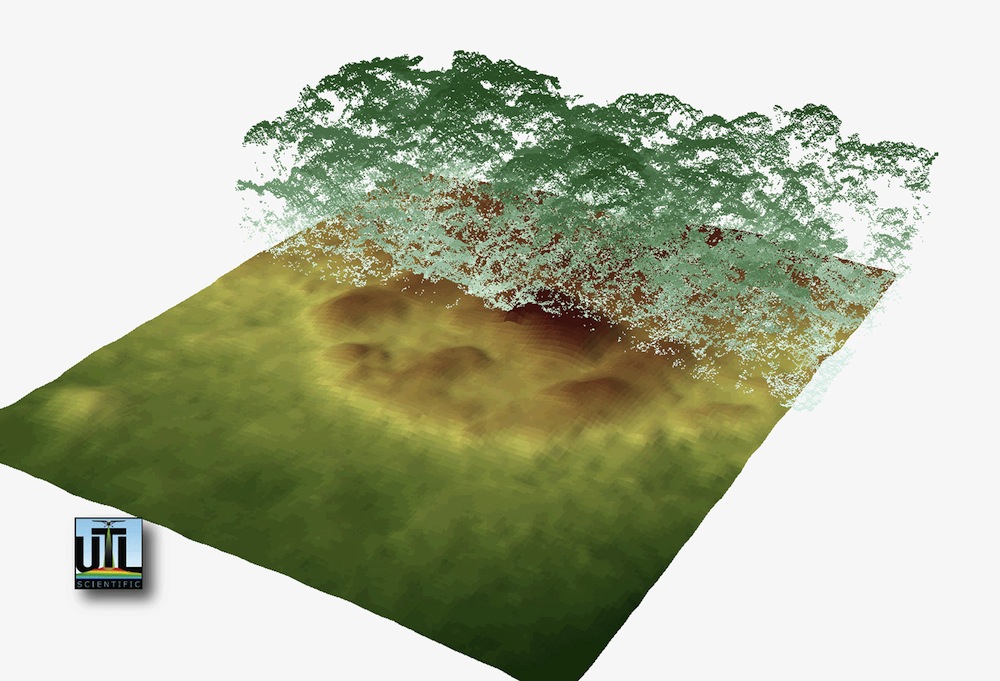
Lidar technology allows researchers to strip
away the green forest canopy and reveals
features beneath, including this mysterious
mound that may be a sign of ancient
civilization in the Honduras rainforest.

CREDIT: UTL Scientific, LLC
Ruins of Lost City May Lurk Deep in Honduras Rain Forest
May 15, 2013 | Stephanie Pappas | Live Science

New images of a possible lost city hidden by Honduran rain forests show what might be the building foundations and mounds of Ciudad Blanca, a never-confirmed legendary metropolis.

Archaeologists and filmmakers Steven Elkins and Bill Benenson announced last year that they had discovered possible ruins in Honduras' Mosquitia region using lidar, or light detection and ranging. Essentially, slow-flying planes send constant laser pulses groundward as they pass over the rain forest, imaging the topography below the thick forest canopy.

What the archaeologists found — and what the new images reveal — are features that could be ancient ruins, including canals, roads, building foundations and terraced agricultural land. The University of Houston archaeologists who led the expedition will reveal their new images and discuss them today (May 15) at the American Geophysical Union Meeting of the Americas in Cancun.

Square structures may mark the foundations of ancient
 
buildings in the Honduran rainforest.
CREDIT: UTL Scientific, LLC


Ciudad Blanca, or "The White City," has been a legend since the days of the conquistadors, who believed the Mosquitia rain forests hid a metropolis full of gold and searched for it in the 1500s. Throughout the 1900s, archaeologists documented mounds and other signs of ancient civilization in the Mosquitias region, but the shining golden city of legend has yet to make an appearance.

 Whether or not the lidar-weilding archaeologists have discovered the same city the conquistadors were looking for is up for debate, but the images suggest some signs of an ancient lost civilization.

"We use lidar to pinpoint where human structures are by looking for linear shapes and rectangles," Colorado State University research Stephen Leisz, who uses lidar in Mexico, said in a statement. "Nature doesn't work in straight lines."

The archaeologists plan to get their feet on the ground this year to investigate the mysterious features seen in the new images.

Follow Stephanie Pappas on Twitter and Google+. Follow us @livescience, Facebook & Google+. Original article on LiveScience.com.

Thursday, May 9, 2013

Corporate Fail: Disney's Attempt to Trademark Cultural Holiday

Cartoon by Lalo
Alcaraz/Pocho.com
Corporate Fail: Disney's Attempt to Trademark Cultural Holiday
May 7, 2013 | Common Dreams | Andrea Germanos

Disney drops efforts to trademark 'Día de los Muertos' following online outrage

Disney has dropped its effort to trademark 'Día de los Muertos,' a holiday celebrated in Mexico and around the world, following widespread outrage.

 Fronteras Desk reported that
Disney filed 10 requests in the U.S. Trademark and Patent Office this month to coin the phrase. Disney's filings are mainly for merchandise, presumably connected to an upcoming film.

The areas they are hoping to secure include “education and entertainment services,” “fruit preserves; fruit-based snack foods,” “toys, games and playthings,” “clothing,” “footwear,” “backpacks,” “clocks and jewelry” and more.
Online outraged followed the news that the corporation would appropriate and profit from a cultural tradition.

A Change.org petition launched following the announcement states:
Dia de los Muertos is a religious observance during which Mexican people, and particularly native peoples, in Mexico, the United States, and abroad, honor ancestors and loved ones who have died. This important religious, spiritual, and cultural observance pre-dates the invasion of Mexico by the Spanish. We celebrate these sacred days and honor our deceased loved ones by making altars and placing offerings of food such as pan de muertos baked in shapes of skulls and figures, candles, incense, yellow marigolds known as cempaxochitl, and offering prayers and the smoke of copal. Disney's proposed trademarks would negatively affect the livelihood of bakers, the work of artists and craftspeople, and of writers and educators.
Our spiritual traditions are for everyone, not for companies like Walt Disney to trademark and exploit. I am deeply offended and dismayed that a family-oriented company like Walt Disney would seek own the rights to something that is the rightful heritage of the people of Mexico.
But just a week after submitting its trademark requests, Disney said it was dropping those efforts, stating:
Disney's trademark filing was intended to protect any potential title for our film and related activities. It has since been determined that the title of the film will change, and therefore we are withdrawing our trademark filing.
As On the Commons, a movement working for a commons-based society has documented, Disney has been 'raiding the commons' for decades, taking from the public domain but offering nothing back in return.

Worldwide ‘March Against Monsanto’ Protests Planned for May 25th

© Natural Society
Worldwide ‘March Against Monsanto’ Protests Planned for May 25th
May 9, 2013 | Natural Society | Anthony Gucciardi

Countless individuals will soon assemble in small and large groups around the nation and the globe alike in protest against Monsanto’s genetic manipulation of the food supply. Organized under the May 25th movement known as the ‘March on Monsanto’, the massive new rally reveals how the grassroots public has truly had enough of Monsanto’s monopoly on the many staple crops that have quickly been sucked into Monsanto’s genetically modified tycoon.

It’s virtually impossible these days to enter a grocery store, even one bearing the title of ‘natural’, and not encounter at least a few items that contain genetically modified ingredients. And for quite some time, this fact was not even known to the large majority of the United States public. Many simply did not even know what a GMO was, or what it could potentially do to their bodies (or the bodies of the children who they were feeding with genetically engineered processed food).

This, of course, stems from the fact that the FDA and Monsanto have decided that you aren’t allowed to know if your food contains GMOs. Even despite the fact that peer-reviewed research has pegged Monsanto’s best selling herbicide Roundup (which is a key part of Monsanto’s Roundup-ready GMO crops) to around 37 associated diseases, the FDA says it’s perfectly safe. So safe that it’s not even necessary to label in your food. So very safe that the only study that ever examined how Roundup and GMOs affect rats throughout their lifetime found that the rats developed tumors so large that it impacted their very ability to move.

It’s madness that has been identified for a long time by alternative news writers and readers, but thanks to the success of Prop 37 and other initiatives it has now hit the general public — and they’re not happy.

The Grassroots Will End Monsanto 

Now enter campaigns like the March on Monsanto, which is slated to happen around the world on May 25th. It’s a grassroots event that has turned into a major organized movement thanks to countless local activists. The event is going on in major cities like San Diego and New York City, to small towns and even rural areas. It’s all being organized online via an open Google Document, where you can find the protest nearest to you and be a part of it. There’s also many open slots for organizers and speakers, so if you’re interested in that be sure to check that out as well.

The beauty of these events is that they are really the most effective at taking down any type of corrupt entity, as the grassroots aspect just empowers so many individuals without an underlying motivation for profits or anything of that sort. It really just comes down to people who want to eat real food and not some junk that’s spliced with the genetics of a spider. Or more importantly, the few people who understand that if we don’t stop genetically modified organisms today, they will develop technologically into what’s known as things like ‘biopharmaceutical‘ crops tomorrow.

I’ve said this back in 2011 and 2012, and I really do believe the grassroots will destroy Monsanto within the next 3-4 years (at most). The company has gotten away with Agent Orange and the hundreds of thousands of deaths from that, it has gotten away with horrendous pollution dumps, it has truly gotten away with so much that the average ‘small business’ (a business that isn’t in bed with the government agencies policing it) would never be able to. And the people aren’t having it anymore.

Checkout March Against Monsanto and head to a local event. Hand out some printed articles on GMOs from NaturalSociety or elsewhere, and just try and spread the word in a kind and inviting way to the general public.

About Anthony Gucciardi

Google Plus Profile Anthony is an accomplished investigative journalist whose articles have appeared on top news sites and have been read by millions worldwide. Anthony's articles are routinely featured on top health & political websites such as Drudge Report, NaturalNews, and Infowars. Anthony is also a founding member of Natural Attitude, a leading developer of super high quality spagyric formulations.

Saturday, April 6, 2013

Talk Nation Radio: Richard Wolff on Putting Workers in Charge at Work

Talk Nation Radio: Richard Wolff on Putting Workers in Charge at Work
Apr 3, 2013 | DavidSwanson.org


Richard Wolff is a professor of economics emeritus at the University of Massachusetts Amherst and the author of Democracy at Work.  See http://democracyatwork.info

Total run time: 29:00

Host: David Swanson.

Producer: David Swanson.

Music by Duke Ellington.

Download or get embed code from Archive or  AudioPort or LetsTryDemocracy.

Syndicated by Pacifica Network.