Showing posts with label Britain. Show all posts
Showing posts with label Britain. Show all posts
Thursday, March 13, 2014
Fukushima meltdown continues around the world
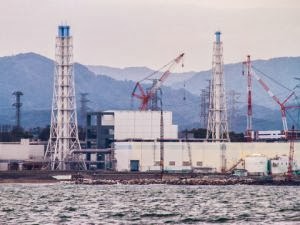
Three years after the Fukushima nuclear catastrophe hit our TV screens, Paul Mobbs examines the still unfolding global disaster - and the motives of politicians whose love of nuclear power is stronger, than it is wise.
Three years ago today we first learned of the on-going meltdown at the Fukushima Daiichi nuclear plant.
TV screens showed long lens shots of concrete buildings exploding in showers of dust, worsening the burdens of one of Japan's worst natural disasters in recent times.
The timing was unfortunate for some - such as the environmental activists who had recently gone 'pro-nuclear' - and that's not to forget one commentator who, remarkably, went pro-nuclear as a direct result of the catastrophe.
At the time that led me in to a media debate on the issue of nuclear power, although in reality we never got further than the issue of "how scary" the technology was.
Ultimately that discussion never really focused on the real energy issues - which I also set out in The Ecologist last week.
The meltdown continues
Three years on though, and the meltdown continues apace - far outside of Japan.
At Fukushima Daiichi itself, it emerged this week that ongoing problems managing the site (and the large costs involved in that process) are leading towards the nuclear industry's tried and tested methods of clean-up - deliberately polluting the environment.
Echoing the call from Tepco last year, former chair of the US Nuclear Regulatory Commission, Dale Klein, said that the liquid wastes form the site should be dumped via "controlled releases" into the Pacific Ocean.
Which, to judge by the series of "accidental" leaks over the last two years, appears to have been the policy all along. All the more so as Tepco has no final resting place for the intensely radioactive water on the site - 300,000 tonnes to date, stored in 1,200 tanks, a volume that is increasing by thousands of tonnes a week.
In the US, Fukushima remains a live issue
The involvement of former US nuclear safety officials in the disaster is a testament to the problems Fukushima presents to the industry as a whole. As elsewhere around the world, this is a live political issue in the USA.
President Obama is seeking to give Government-backed loans to encourage the development of new nuclear plants.
And rejuvenating the Fukushima story, NBC News just ran a story, based on freedom of information requests, detailing how the US safety regulators deliberately played-down the risks to the public.
"While we know more than these say", Nuclear Regulatory Commission Public Affairs Director Eliot Brenner wrote in emails in 2011, "we're sticking to this story for now."
Meanwhile, in Canada the plume of radioactive water from Fukushima, brought across the Pacific by ocean currents, is just arriving on the shores of British Columbia. Environmental sampling has shown the first 'Fukushima footprint' on the shorelines of the rivers around Vancouver.
In fact that's just the tip of a large 'liquid iceberg' that's been studied by scientists for the last year or so. And already, in advance of the arrive of the plume on US shores, the media is being cranked up with fear, uncertainty and doubt to bury the facts of story.
And in Britain ...
We have the extraordinary spectacle of the Conservative Party, the Labour Party, the LibDems and UKIP all strongly supporting new nuclear power in the UK - never mind that it will cost UK taxpayers and energy users untold billions in subsidies, and do nothing to solve any short term 'power gap'.
And in the case of the LibDems - never mind that those now assiduously promoting the technology were, before the election, all strongly opposed to it as a fundamental point of principle. So now the only political opposition is coming from the Green Party.
As published in The Ecologist yesterday the support package for Hinkley C runs foul of the EU's competition laws - and may well be stopped for that reason. Curious it is how even confirmed neo-liberals - who in ordinary circumstances profess to hate any kind of subsidy - are entirely content to throw tens of billions at the nuclear white elephant.
Could it happen here?
Rather more worryingly, the Hinkley nuclear site is situated just 50 metres from the Bristol Channel coast, and at an elevation of just 14 metres above sea level. Notwithstanding that a tsunami struck the Bristol Channel in 1607 causing immense damage and widespread flooding.
A contemporary account speaks of "mighty hilles of water tombling over one another in such sort as if the greatest mountains in the world had overwhelmed the lowe villages or marshy grounds. Sometimes it dazzled many of the spectators that they imagined it had bin some fogge or mist coming with great swiftness towards them and with such a smoke as if mountains were all on fire, and to the view of some it seemed as if myriads of thousands of arrows had been shot forth all at one time."
If it happened before, it can happen again. Indeed a 4.1 magnitude earthquake took place only last month (February 2014) in the mouth of the Bristol Channel.
The political lesson of Fukushima in the UK, it seems, is to follow the example of the 'three wise monkeys' - "see no evil, hear no evil, speak no evil". Could it be more than mere coincidence that the monkeys come to us via ancient Japanese tradition?
Expediency rules
One thing is certain - the nuclear power issue has not moved on one millimetre towards any resolution.
The political support for nuclear power remains because politics does not know how to deal with the issues raised by our current energy crisis. The public is still unsupportive because, irrespective of official reassurances, the nuclear story refuses to go away.
And in Japan, the Fukushima nuclear crisis continues today - hidden behind concrete and plastic contamination screens, and even more fearsome legal barriers to the publication or dissemination of information about Fukushima.
Politics is still looking for the most expedient rather than the right solution to the problem.
About the Author
Paul Mobbs is an independent environmental consultant, researcher and author. See his Free Range Activism website.

Saturday, March 8, 2014
Fracking is the death spasm of a defunct economic order
 |
| Poundland jubilee flag maker by Banksy. Photo: Duncan Hull via Flickr.com. |
| The Ecologist | Mar 5, 2014 | Paul Mobbs |
Political support for fracking is not just about energy, writes Paul Mobbs. It reflects the greater ecological and resource crisis at the root of our current economic woes - and only postpones the essential shift to a new kind of economy.
For eight months I've been travelling around England and Wales talking about 'unconventional gas' - shale gas, coal-bed methane and underground coal gasification, often erroneously conflated as 'fracking'.
This intensive period of work began last June, and continued into 2014 to meet the continued requests for talks. In particular I've tried to tour those areas next in line for extreme energy developments - South Wales, The Marches and the South Midlands.
Travelling has its fringe benefits. I get to read a lot, whiling away the hours on trains or in cafés, moving between consecutive events or home.
2013 saw the publication of the largest number of new scientific papers and reports on the unconventional gas issue. As I've been travelling to tell others 'what I know', I've also used that time to extend and refine my work - tailoring it to incorporate the new research published over the past year.
The central question - why?
Thus far the debate around unconventional gas / fracking has focussed on pollution, flammable water, earthquakes, noise, toxic fumes, climate change, etc. As a result people mainly focus on the "what?", or at a local level the "where?", of the issue. My research leads me toward one single question... "why?".
It's only by asking "why?", and finding the evidence to support that analysis, that we can make sense of what is otherwise such a senseless policy. Trouble is, that question produces a very unpopular answer!
With regards to the "what?" and "where?" issues, there's plenty of evidence available to settle the arguments already highlighted by the media debate. For example:
- The arguments for cheap and plentiful shale gas? - they're based upon wishful thinking rather than hard fact, are biased towards the business interests of the energy service and investment industries involved, cannot be supported by objective data from the USA, and are not supported by other energy economists, economic consultants or even Cuadrilla's Chairman and Government non-executive minister, Lord Browne;
- The lower carbon emissions from shale gas promoted by recent government reports? - that's not what has been found from actual measurements in the field, and that specific claim is based upon an unrepresentative 'non-randomised' survey by a university department which has previously fallen foul of reporting its conflicts of interest;
- The argument that Britain can regulate fracking safely? - that's not what experience tells us from the USA, and the United Nations Environment Programme has stated that even with the best regulation pollution is still inevitable;
- The lack of evidence for health effects from shale production, again trumpeted in recent government reports? - again, that's not supported by recent studies, media reports, or investigations into the process used to create that Government-backed health study.
The difficulty is that, irrespective of how much evidence exists to challenge the official / Government line, it's practically irrelevant because they don't want to hear it. It's for this reason that we must put the "why?" question instead.
An ideological clash
Over recent months I've talked to action groups, local councillors, people in village and town halls, and students in lecture theatres. People often think that I do these talks just to tell people 'what I know'.
In fact I also study people's reactions to what I say, and take mental notes on the questions and discussions afterwards. By studying these I can refine how I present and argue my work so that other people might understand it better in the future.
However, I find that of late I'm having problems presenting the 'fracking' issue. The evidence I'm reviewing, and my efforts to create a holistic view of the issue, are dragging me towards a specific vision of its underlying causes.
Unfortunately both the general public and some environmentalists have problems following me down this route. I can't explain the full details within the space available here, but I will summarise the main points.
The greater unspoken issue here is the ideological clash between different views of economic theory.
The fundamental issue is 'economic degrowth'
Under the traditional economic view, energy is just another price factor in the economy. In contrast, recent research suggests that energy and resource prices are far more significant within the process of technological development and the creation of economic growth.
Energy's impact on the economy is perhaps ten times its nominal value. It's high energy and resource prices which drive our economic woes today, not simply debt.
Proposals for unconventional gas in Britain do nothing to change that; shale gas is more expensive than the 'conventional' sources we rely upon today. Therefore no matter how quickly we roll-out projects we're never going to solve our fundamental economic problems.
It's at this point that I experience the greatest resistance to the message regarding the relationship between economics, energy and the environment. That's because our ecological problems are multi-faceted; i.e., this is not just a carbon issue.
In addition to the ecological economics debate, we're now at peak oil too - and that's going to force a resolution to this issue whether we like it or not. Irrespective of which ideological camp you're in, this message doesn't have a 'positive side'; what we're talking about here is economic degrowth.
'Business as usual' is over
In short, if you want to know why the Government is so bent upon fracking, or setting fire to coal seams underground, it's quite simple really - there's no high quality fossil fuels left to burn to keep 'business as usual' working!
Unfortunately resistance to the issue of 'ecological limits' extends well beyond business and politics. Some environmentalists have difficulties with the realities of 'limits' too.
For example, to mark the fortieth anniversary of the book, 'The Limits to Growth', there was a conference held in Washington. Entitled 'Perspectives on Limits to Growth 2012', it was hosted at the Smithsonian Institute, and organised by the Smithsonian Institute and the Club of Rome.
And the whole day was almost entirely ignored by the world's media and - rather inexplicably - by much of the environment movement!
We must change the economic process itself
As part of our opposition to fracking we have to be absolutely clear about why it will not do what is claimed of it.
Yes, there's plenty of evidence to say that unconventional gas production is bad. There's equally compelling evidence that, irrespective of the option the Government chooses, we will still not solve our economic difficulties by any 'growth' solution either.
The real problem is economic growth and consumption within a finite environment. It's only by changing the economic process itself, to adapt to the ecological limits acting upon the human system, that we can tackle the inter-related issues of resource depletion, climate change and ecological degradation.
Extreme energy technologies do nothing to help us achieve those ends. They are a forlorn attempt to stave off the inevitable moment when that change in economic objectives must come.
About the Author
Paul Mobbs is an independent environmental consultant, researcher and author.
For a fully referenced version of this article see the fully annotated version of this article on Paul's web site.
Sunday, February 16, 2014
Winter Hurricane Atlantic storm brings more flood misery to drenched Britain: heaviest rainfall in 250 years
Winter Hurricane Atlantic storm brings more flood misery to drenched Britain: heaviest rainfall in 250 years
Feb 14, 2014 | The Extinction Protocol
 BRITAIN – Princes
William and Harry rolled up their sleeves Friday to help out with flood
defense efforts as Britain braces for another hammering Friday from a
major storm off the Atlantic. The princes showed up at 6 a.m. local time
in the flood-hit village of Datchet, west of London. The community is
one of several in Berkshire and Surrey to have been hit by flooding in
recent days after the River Thames burst its banks. Nearly 6,000 homes
have been inundated along the Thames Valley and elsewhere following
England’s wettest January in 2½ centuries. A car dealership’s display
model sits on a ramp above floodwaters in Datchet, England, on Monday,
February 10. Britain has been hit by bad weather since early December,
and swaths of southwestern England have been flooded in continuously
stormy weather. Some communities in low-lying areas of Somerset, in
southwest England, have been under water since December. And there’s no
letup in sight just yet. The Environment Agency has warned of more
flooding along the Thames over the weekend as the river reaches its
highest level in 60 years. A powerful Atlantic storm that is blowing in
on Friday will add to people’s woes. It comes only two days after a
storm blasted western Wales and northwest England, as well as parts of
Ireland, with gale-force winds. Some 450,000 properties were affected by
power outages as a result of Wednesday’s storm. Only 16,000, almost all
of them in Wales, were still without power Friday morning, according to
the Energy Networks Association, but high winds could cause new
problems.
BRITAIN – Princes
William and Harry rolled up their sleeves Friday to help out with flood
defense efforts as Britain braces for another hammering Friday from a
major storm off the Atlantic. The princes showed up at 6 a.m. local time
in the flood-hit village of Datchet, west of London. The community is
one of several in Berkshire and Surrey to have been hit by flooding in
recent days after the River Thames burst its banks. Nearly 6,000 homes
have been inundated along the Thames Valley and elsewhere following
England’s wettest January in 2½ centuries. A car dealership’s display
model sits on a ramp above floodwaters in Datchet, England, on Monday,
February 10. Britain has been hit by bad weather since early December,
and swaths of southwestern England have been flooded in continuously
stormy weather. Some communities in low-lying areas of Somerset, in
southwest England, have been under water since December. And there’s no
letup in sight just yet. The Environment Agency has warned of more
flooding along the Thames over the weekend as the river reaches its
highest level in 60 years. A powerful Atlantic storm that is blowing in
on Friday will add to people’s woes. It comes only two days after a
storm blasted western Wales and northwest England, as well as parts of
Ireland, with gale-force winds. Some 450,000 properties were affected by
power outages as a result of Wednesday’s storm. Only 16,000, almost all
of them in Wales, were still without power Friday morning, according to
the Energy Networks Association, but high winds could cause new
problems.
The severe weather has affected travel, with many trains delayed or canceled. A sea wall under one coastal section on the main rail line to the southwest collapsed after high seas pummeled it. There were 18 severe flood warnings, meaning a danger to life, in place Friday, most of them in southeast England. Warnings of high winds are also in place for parts of southern England. In the past few days, more than 1,000 homes have been flooded in well-heeled communities along the Thames Valley, including Maidenhead and Windsor, where Queen Elizabeth has a castle. The Environment Agency warned the area could expect “widespread flooding affecting significant numbers of properties and whole communities and significant disruption to travel” in the coming days. Central London has been protected from flooding by the Thames Barrier, which prevents high tides surging up the tidal river when it is already full. The Met Office, the UK’s national weather service, said the recent series of winter storms “has been exceptional in its duration, and has led to the wettest December to January period in the UK since records began.” But it’s not yet able to say whether climate change is a factor in the extreme weather, as some observers have suggested. “As yet, there is no definitive answer on the possible contribution of climate change to the recent storminess, rainfall amounts and the consequent flooding. This is in part due to the highly variable nature of UK weather and climate,” it said. -CNN
Feb 14, 2014 | The Extinction Protocol
The severe weather has affected travel, with many trains delayed or canceled. A sea wall under one coastal section on the main rail line to the southwest collapsed after high seas pummeled it. There were 18 severe flood warnings, meaning a danger to life, in place Friday, most of them in southeast England. Warnings of high winds are also in place for parts of southern England. In the past few days, more than 1,000 homes have been flooded in well-heeled communities along the Thames Valley, including Maidenhead and Windsor, where Queen Elizabeth has a castle. The Environment Agency warned the area could expect “widespread flooding affecting significant numbers of properties and whole communities and significant disruption to travel” in the coming days. Central London has been protected from flooding by the Thames Barrier, which prevents high tides surging up the tidal river when it is already full. The Met Office, the UK’s national weather service, said the recent series of winter storms “has been exceptional in its duration, and has led to the wettest December to January period in the UK since records began.” But it’s not yet able to say whether climate change is a factor in the extreme weather, as some observers have suggested. “As yet, there is no definitive answer on the possible contribution of climate change to the recent storminess, rainfall amounts and the consequent flooding. This is in part due to the highly variable nature of UK weather and climate,” it said. -CNN
Monday, February 10, 2014
Britain grapples through worst torrential rainfall in 248 years

Feb 7, 2014 | The Extinction Protocol
LONDON - Britain announced emergency funding Thursday to cope with devastating floods after what officials said had been likely the worst spell of winter rainfall in at least 248 years. Prime Minister David Cameron’s government has faced criticism for its handling of a crisis that has left swathes of the country under water, with a key railway line washed away. Several people had to be rescued from deluged homes on Thursday while more storms are expected this weekend. Across the English Channel, France’s western tip was placed on alert for flooding as high tides wreaked havoc along Europe’s Atlantic coast. Pickles said the winter was the “wettest since George III was on the throne,” referring to Britain’s monarch from 1760-1820. He added that flood victims have “literally been through hell and high water.” Britain’s Meterological Office released figures confirming Pickles’ assessment. For southern England, “regional statistics suggest that this is one of, if not the most, exceptional periods of winter rainfall in at least 248 years,” it said in a statement.
Parts of the region received five months of rainfall between December 12 and January 31. The rainy winter has set records tumbling, being the wettest combined period of December and January across the United Kingdom since 1910, the Met Office said. It was also the windiest December since 1969, based on the occurrence of winds over 69 mph. For England alone it was the wettest December to January since 1876-1877 and the second wettest since rainfall records began in 1766.
Firefighters in Somerset and the neighboring county of Devon rescued 14 people from homes and stranded vehicles late Wednesday and early Thursday. Rescuers in inflatable boats rescued four adults and three children from one house after a river burst its banks in Stoke St Gregory, a village that heir to the throne Prince Charles visited on Tuesday, a fire brigade spokesman said. Prince Charles himself said on his trip to the region that the ‘tragedy is that nothing happened for so long.” Cameron personally took charge of the government’s response on Wednesday after facing a growing tide of criticism for being too slow to aid stricken communities. But the damage has kept coming, with the main train service connecting Devon and the county of Cornwall with the rest of Britain being suspended after part of the sea wall under the coastal railway line collapsed. Meanwhile in France, Finestere, a department of Brittany which juts out into the Atlantic, was placed on red flooding alert and braced for two of its rivers, the Morlaix and the Laita, to burst their banks as a result of heavy rain forecast for Thursday. The highest-level warning was issued by Meteo-France shortly after the agency placed 29 departments from Brittany to the Paris region on a second-tier orange alert. Recent days have seen huge waves; gale-force winds and torrential rains combine to batter sea defenses from the Basque country on France’s border with Spain. The storms sent a Spanish cargo ship crashing into a sea wall at the French port of Bayonne on Wednesday, splitting it clean in two. –Space Daily
Saturday, February 8, 2014
More Climate Cha Ching: Brits Just Won’t Know What An Intelligent Scientist Is
Brits Just Won’t Know What An Intelligent Scientist Is
Feb 8, 2014 | Real Science
Five years ago, the Met Office’s top scientist said that Scottish skiing is a thing of the past.

BBC News – Skiers warned of terrain traps in Scotland’s mountains
Feb 8, 2014 | Real Science
Five years ago, the Met Office’s top scientist said that Scottish skiing is a thing of the past.
09 February 2009Five years later, their problem is that the chair lifts are buried in snow
Alex Hill, the chief government adviser with the Met Office, told The Scotsman there was no future for skiing in Scotland because climate change would see winters become too warm for regular snowfall.
Mr Hill said: “Put it this way: I won’t be investing in the skiing industry.
Skiing is ‘doomed’ … so enjoy it while it lasts – The Scotsman
BBC News – Skiers warned of terrain traps in Scotland’s mountains
Monday, February 3, 2014
Expensive wastelands: Billionaires' Row where mansions worth £350MILLION have been abandoned and left to rot for up to a quarter of a century
 |
© Unknown
Vacancies: Around a third of the houses on 'Billionaires' Row in Hampstead are standing empty |
Feb 1, 2014 | Hugo Gye \ Daily Mail
More than a dozen properties on one of London's most expensive streets are currently standing empty after being abandoned by their super-wealthy owners, it has emerged.
The Bishops Avenue in Hampstead, north London - dubbed 'Billionaires' Row' - has at least 16 giant mansions standing vacant, with a combined value of an estimated £350million.
Some of the homes have been unoccupied for up to 25 years, with the interiors left to rot and rooms taken over by plants, according to a new investigation.
The Guardian reported that around a third of the properties on the most expensive stretch of the road are currently standing empty.
And even some of the houses which have not been abandoned are unoccupied much of the time, according to residents, as they have been bought by rich foreigners who usually live abroad.
The Bishops Avenue, which runs between Hampstead Heath and East Finchley, attracts wealthy buyers thanks to its large houses and extensive gardens, giving it a rural atmosphere despite its relatively central location.
Among the empty houses on the road - home to media baron Richard Desmond as well as members of the Saudi and Brunei royal families - is Heath Hall, currently on sale for £65million.
The 14-bedroom house, which was built for the founder of the Tate & Lyle sugar empire, cost its latest owner £40million to renovate after it fell into disrepair after years of neglect.
Continue reading..
Tuesday, January 28, 2014
Raping the planet: U.K. Fracking companies could be allowed under your home without consent
 |
© Reuters / Phil Noble
A sign stands outside a protest camp at the entrance to the IGas Energy exploratory gas drilling site at Barton Moss near Manchester in northern England January 13, 2014. |
Jan 27, 2014 | RT
Government sources have admitted that they are considering overhauling UK trespass laws to make it easier to extract shale gas. Under the plans being considered by the government, fracking could take place under homes without owners' permission.
The government sources say they are mulling over these amendments to the law to make it easier for companies to explore and extract shale gas, amid worries that landowners and other parties could hold up energy companies in costly and lengthy court proceedings, the Telegraph reports.
The plans are expected to be published in the coming months, and are likely to be the most controversial yet in Prime Minister David Cameron's plans to push through fracking regardless of the environmental cost.
Under the current laws, companies need permission from all the landowners beneath whose land they drill. As shale gas exploration often involves drilling down vertically and out horizontally for more than a mile, this can mean that several landowners are involved.
If permission is not given, then the energy company is committing trespass and the company would have to take the landowner to court, which would then rule if they should be awarded drilling rights and how much compensation should be paid to the landowner.
While compensation is often only a minimal amount, less than £100, companies fear that court proceedings could be costly and drawn out by years of appeals. They have been lobbying the government to change the law.
Unsurprisingly, given how close the government and the energy companies are on shale gas, the Department of Energy and Climate Change (DECC) has confirmed they are looking at whether the current laws are "fit for purpose."
Greenpeace has tried to use the existing law to encourage thousands of landowners in areas known to be rich in shale gas to decline their permission for fracking to take place. Landowners could also take out injunctions, which would present a further barrier to companies.
One option the government could take is to introduce a compulsory purchase regime, similar to what is already in place for companies needing to lay pipelines underground.
"All options are on the table. It would be difficult to implement a regime that removed any kind of compensation. You could change the rules so you have a de facto right, but then you have to pay. The compensation could be less than £100," a Whitehall source said.
Even if the trespass law was changed, companies would still need to negotiate access rights for the drilling site, planning permission from the local council, and other permissions from the government and environmental regulators.
"Shale gas and oil operations that involve fracking in wells drilled over a mile down are highly unlikely to have any discernible impacts closer to the surface," said a spokesman for the DECC.
But environmental groups, as well as many residents in areas which have been earmarked for fracking disagree. They argue that the health and environmental effects are very damaging and include earth tremors, water pollution and human exposure to highly toxic chemicals used in the process.
Fracking or hydraulic fracturing involves pumping water, sand and chemicals down a well at high pressure to fracture rocks and then extract the gas trapped within them.It has been linked to health and environmental damage in some US states where it is extensive.
Ian Crane, a former oil executive, who is now a campaigner against fracking, explained to RT the extreme dangers that shale gas exploration poses to a densely populated country like the UK.
"We've seen the effects in places like Colorado and southern Queensland in Australia. When the population density of the UK is 20 times that of Colorado and 100 times that of Queensland, I would simply implore people to do a bit of research and look at the damage and the contamination that has been wreaked in these locations around the world," he said.
He also pointed out that of the four wells drilled in the UK, seismic events have occurred at two of them, and there is a very real chance that people in areas where fracking is taking place will no longer have access to safe and clean water.
Source: See also:
Investigation confirms the evils of fracking
Opposed to fracking? Then the corporatocracy considers you to be a terrorist
Massachusetts seeks 10 year ban on gas fracking after series of Texas earthquakes
Dangerous levels of radioactivity found at fracking waste site in Pennsylvania
Is there a media blackout on the fracking flood disaster in Colorado?
Monday, December 23, 2013
Strongest Jet Stream Ever Recorded To Bring Two Super Storms To United Kingdom Region This Week With Possible Tornadoes In Ireland

Dec 23, 2013 | Before Its News
A massive storm system is moving out of the United States today, which went through Canada yesterday … carries with it the strongest jet stream now ever recorded that will cause two super storms in the United Kingdom region this week.
As if engineered, this never before seen jet stream of 275 mph in the upper levels is exiting Canada. This jet stream will move across the Northern Atlantic and deepen a surface low that is only 1004mb at this moment. This jet stream will act as a vacuum, sucking the air from the center of the storm and dropping the pressure within it to an impressive 930mb low. This is a pressure fall over over 50mb by Monday evening to Tuesday morning for the United Kingdom region. It will cause problems, with the initial concern will be the amount of rain for Wales, Central and Southern England where over 50mm of rainfall will fall. Double that over the hills. The rain will fall on already saturated ground which will lead to flooding.
Very windy on Monday with the system, about 70 mph gusts likely in the South. On Christmas Eve expect 70-80 mph wind gusts in Northern Ireland and Western Scotland … with heavy snow in the Scottish Mountains. Weakening winds across Northern Scotland on Christmas day with winds relaxing … for the most part it looks nice on Christmas.
But we’re not done yet. This powerful jet will deepen yet another low pressure system on Friday and this warm front will sweep across Ireland with tornadic dynamics. It’s very likely that with this surface low being much further south than the first one that shear and warm air advection through Ireland will cause a tornado scenario there so be exceptionally alert.
Source: http://www.theweatherspace.com/2013/12/22/strongest-jet-stream-ever-recorded-to-bring-two-super-storms-to-united-kingdom-region-this-week-with-possible-tornadoes-in-ireland/
Saturday, October 19, 2013
Frackdown Day: Worldwide protest to end shale gas extraction [Video]
 |
| © RT |
Oct 19, 2013 | RT
Global Frackdown Day is on - Saturday marks a worldwide protest, uniting all activists who want to put an end to shale gas extraction. 'Fracktivists', as they're called, are urging their governments to stand up to the oil and gas lobby. However, in Britain the authorities see things very differently... Prime Minister has become a vigorous advocate of the risky technique, as Laura Smith reports. So why exactly are environmentalists so concerned about this particular form of oil and gas extraction? For more on this RT is joined by Vanessa Vine - she's an anti-fracking campaigner for Britain and Ireland Frack Free group
Saturday, October 5, 2013
Keiser Report: Working Class Debt Slaves (E506)
Keiser Report: Working Class Debt Slaves (E506)
Oct 5, 2013 | RT
In this episode of the Keiser Report, Max Keiser and Stacy Herbert, discuss David Cameron as a Special Purpose Vehicle (SPV) which causes the wealth of the nation to drop. They also discuss Continuous Payment Authorities as a metaphor for our financial systems continuously taking toll payments, whether via interest fees or inflation. Max also notes that David Cameron claims 'profits' is not a dirty word; and yet, to every major, successful corporation on Earth "profits' is, indeed, a word to be avoided at all costs. In the second half, Max interviews Dr Michael Hudson of michael-hudson.com about the global economic policies turning the UK into Greece and the U.S. into Latvia and a world in which only the little companies make profits.
FOLLOW Max Keiser on Twitter: http://twitter.com/maxkeiser
WATCH all Keiser Report shows here:
http://www.youtube.com/playlist?list=... (E1-E200)
http://www.youtube.com/playlist?list=... (E201-E400)
http://www.youtube.com/playlist?list=... (E401-current)
Oct 5, 2013 | RT
In this episode of the Keiser Report, Max Keiser and Stacy Herbert, discuss David Cameron as a Special Purpose Vehicle (SPV) which causes the wealth of the nation to drop. They also discuss Continuous Payment Authorities as a metaphor for our financial systems continuously taking toll payments, whether via interest fees or inflation. Max also notes that David Cameron claims 'profits' is not a dirty word; and yet, to every major, successful corporation on Earth "profits' is, indeed, a word to be avoided at all costs. In the second half, Max interviews Dr Michael Hudson of michael-hudson.com about the global economic policies turning the UK into Greece and the U.S. into Latvia and a world in which only the little companies make profits.
FOLLOW Max Keiser on Twitter: http://twitter.com/maxkeiser
WATCH all Keiser Report shows here:
http://www.youtube.com/playlist?list=... (E1-E200)
http://www.youtube.com/playlist?list=... (E201-E400)
http://www.youtube.com/playlist?list=... (E401-current)
Thursday, August 29, 2013
Keiser Report: Sinkhole of Stupid (E490)
Keiser Report: Sinkhole of Stupid (E490)
Aug 29, 2013 | RT
In this episode of the Keiser Report, Max Keiser and Stacy Herbert discuss the sinkholes of stupid causing collapse wherever they occur and, how in Texas, they are totally fracked as the sinkhole of stupid has caused water shortagesl. In the second half, Max talks to Chris Martenson about the four signs of dangerous bubble territory, the markets oblivious to the costs of Fukushima meltdown and the bad economics of fracking.
Aug 29, 2013 | RT
In this episode of the Keiser Report, Max Keiser and Stacy Herbert discuss the sinkholes of stupid causing collapse wherever they occur and, how in Texas, they are totally fracked as the sinkhole of stupid has caused water shortagesl. In the second half, Max talks to Chris Martenson about the four signs of dangerous bubble territory, the markets oblivious to the costs of Fukushima meltdown and the bad economics of fracking.
Saturday, July 20, 2013
UK Government Unveils World's 'Most Generous' Tax Breaks for Fracking
 |
| A fracking protest in Lancashire. (Photo: JustinWoolford/cc/flickr) |
July 20, 2013 | Common Dreams | Andrea Germanos
Environmental groups slam "tax hand-outs to polluting energy firms that threaten our communities and environment"
The British government unveiled the world's "most generous" tax breaks for fracking on Friday, hoping it can "be a leader of the shale gas revolution."
"Shale gas is a resource with huge potential to broaden the UK’s energy mix," stated Chancellor George Osborne, head of the treasury. "We want to create the right conditions for industry to explore and unlock that potential in a way that allows communities to share in the benefits. This new tax regime, which I want to make the most generous for shale in the world, will contribute to that."
"I want Britain to be a leader of the shale gas revolution – because it has the potential to create thousands of jobs and keep energy bills low for millions of people," continued Osborne.
Fracked gas has yet to be produced in the UK, though exploratory drills are underway.
The new tax rate would chop the current rate in half, as "shale gas producers will pay just 30 per cent tax on their profits, compared to the 62 per cent that the oil and gas industry has traditionally paid," the Independent reports.
The UK's Friends of the Earth's Head of Campaigns, Andrew Pendleton, said in a statement that
Promising tax hand-outs to polluting energy firms that threaten our communities and environment, when everyone else is being told to tighten their belts, is a disgrace.And Lawrence Carter, an energy campaigner for Greenpeace, noted in an op-ed on Friday:
Ministers should be encouraging investors to develop the nation's huge renewable energy potential. This would create tens of thousands of jobs and wean the nation off its increasingly expensive fossil fuel dependency.
The International Energy Agency has described how “huge subsidies and tax breaks are tilting the global energy market in favour of fossil fuels” and have labelled them “public enemy number one for green energy”.On Thursday, a day before Osborne's announcement, Caroline Lucas, UK's only Green MP, took part in a debate on fracking with MPs and said:
Today’s announcement just tilted that balance even further.
It's clear that ministers and fracking firms – increasingly indistinguishable – are keen to press on rapidly.
The direct carbon content of shale gas means widespread use [of it] is incompatible with the climate change targets of the UK. Shale gas is a high-carbon fuel.
Friday, May 3, 2013
Criminal Banking Scam Whitewashed By The Media
 |
| © N/A |
May 3, 2013 | Black Listed News | Mick Meany
Thousands of British homeowners could be at risk of losing their homes as a result of potential widespread mis-selling of ‘interest-only’ mortgages, it has emerged today.
A report from the Financial Conduct Authority (FCA) has found that around 2.6 million ‘interest-only’ mortgage’s are due for repayment over the next 30 years, with one in 10 people having no plan to repay the loan.
It’s thought that banks failed to inform approximately 13% of borrowers that they would need to repay an average debt of £50,000 once their mortgage has ended.
Now the FCA, together with the mainstream media, are attempting to shift blame onto homeowners, citing the need for a ‘wake up call’.
FCA chief executive Martin Wheatley said:
By acting now we are aiming to nip this problem in the bud.
Mortgage lenders have volunteered to contact their most at-risk customers with a ‘wake-up call’ to highlight the report’s findings and what they need to do without delay.Yes of course Marty, we can always trust the banks to do the right thing – recent history has shown us that, right?
So let’s take a look at that history, specifically the organisation who published the report – which is little more than the re-branding of the Financial Services Authority (FSA).
The FCA was created in 2013 as part of a new regulatory structure along with the Bank of England, after the FSA was abolished.
Now, the FSA has a troublesome track record when it comes to finance. It also has a history of protecting companies that have been found guilty of mis-selling.
Before we delve into the nitty-gritty, in December 2012 Andrew Bailey of the FSA warned that “banks are too big to prosecute” and that:
It would be a very destabilising issue. It’s another version of too important to fail.
Because of the confidence issue with banks, a major criminal indictment, which we haven’t seen and I’m not saying we are going to see… this is not an ordinary criminal indictment.This tells us something about the mentality of the FSA, and the financial institute as a whole.
In 2005, the group turned a blind eye to payment protection insurance (PPI), taking very little action to prevent banks from profiting from the scam.
In 2008 they considered allowing banks to officially hide important information from the public.
Just months before the economic crash the FSA ignored warning signals from Northern Rock and allowed the bank to continue without a risk mitigation programme.
In 2008 it tried to protect the identity of the LAUTRO scandal. Also in 2008 the FSA staff received £20m in bonuses for 2008/09, despite self-acknowledged failures of regulating the financial industry.
In 2009 it was revealed that FSA deputy chairman, Sir James Crosby had fired Paul Moore, a whistleblower who warned of dangerous lending practices at HBOS.
I could go on, but I think we get the picture.
This demonstrates that, in reality, even those who are given the responsibility of protecting the British public from the criminal banking elite, only serve to protect the financial institutes and their corporate masters.
Monday, January 21, 2013
It's snowing, and it really feels like the start of a mini ice age
It's snowing, and it really feels like the start of a mini ice age
Jan 21, 2013 | Boris Johnson | TheTelegraph.co.uk
"The Sun is god!" cried JMW Turner as he died, and plenty of other people have thought there was much in his analysis. The Aztecs agreed, and so did the pharaohs of Egypt. We are an arrogant lot these days, and we tend to underestimate the importance of our governor and creator. We forget that we were once just a clod of cooled-down solar dust; we forget that without the Sun there would have been no photosynthesis, no hydrocarbons - and that it was the great celestial orb that effectively called life into being on Earth. In so far as we are able to heat our homes or turn on our computers or drive to work it is thanks to the unlocking of energy from the Sun.
 As a species, we human beings have become so blind with conceit and
self-love that we genuinely believe that the fate of the planet is in
our hands - when the reality is that everything, or almost everything,
depends on the behaviour and caprice of the gigantic thermonuclear
fireball around which we revolve.
As a species, we human beings have become so blind with conceit and
self-love that we genuinely believe that the fate of the planet is in
our hands - when the reality is that everything, or almost everything,
depends on the behaviour and caprice of the gigantic thermonuclear
fireball around which we revolve.
I say all this because I am sitting here staring through the window at the flowerpot and the bashed-up barbecue, and I am starting to think this series of winters is not a coincidence. The snow on the flowerpot, since I have been staring, has got about an inch thicker. The barbecue is all but invisible. By my calculations, this is now the fifth year in a row that we have had an unusual amount of snow; and by unusual I mean snow of a kind that I don't remember from my childhood: snow that comes one day, and then sticks around for a couple of days, followed by more.
I remember snow that used to come and settle for just long enough for a single decent snowball fight before turning to slush; I don't remember winters like this. Two days ago I was cycling through Trafalgar Square and saw icicles on the traffic lights; and though I am sure plenty of readers will say I am just unobservant, I don't think I have seen that before. I am all for theories about climate change, and would not for a moment dispute the wisdom or good intentions of the vast majority of scientists.
But I am also an empiricist; and I observe that something appears to be up with our winter weather, and to call it "warming" is obviously to strain the language. I see from the BBC website that there are scientists who say that "global warming" is indeed the cause of the cold and snowy winters we seem to be having. A team of Americans and Chinese experts have postulated that the melting of the Arctic ice means that the whole North Atlantic is being chilled as the floes start to break off - like a Martini refrigerated by ice cubes.
I do not have the expertise to comment on the Martini theory; I merely observe that there are at least some other reputable scientists who say that it is complete tosh, or at least that there is no evidence to support it. We are expecting the snow and cold to go on for several days, and though London transport has coped very well so far, with few delays or cancellations, I can't help brooding on my own amateur meteorological observations. I wish I knew more about what is going on, and why. It is time to consult once again the learned astrophysicist, Piers Corbyn.
Now Piers has a very good record of forecasting the weather. He has been bang on about these cold winters. Like JMW Turner and the Aztecs he thinks we should be paying more attention to the Sun. According to Piers, global temperature depends not on concentrations of CO2 but on the mood of our celestial orb. Sometime too bright the eye of heaven shines, said Shakespeare, and often is his gold complexion dimmed. That is more or less right. There are times in astronomical history when the Sun has been churning out more stuff - protons and electrons and what have you - than at other times. When the Sun has plenty of sunspots, he bathes the Earth in abundant rays.
When the solar acne diminishes, it seems that the Earth gets colder. No
one contests that when the planet palpably cooled from 1645 to 1715 -
the Maunder minimum, which saw the freezing of the Thames - there was a
diminution of solar activity. The same point is made about the so-called
Dalton minimum, from 1790 to 1830. And it is the view of Piers Corbyn
that we are now seeing exactly the same phenomenon today.
Lower solar activity means - broadly speaking - that there is less agitation of the warm currents of air from the tropical to the temperate zones, so that a place like Britain can expect to be colder and damper in summer, and colder and snowier in winter. "There is every indication that we are at the beginning of a mini ice age," he says. "The general decline in solar activity is lower than Nasa's lowest prediction of five years ago. That could be very bad news for our climate. We are in for a prolonged cold period. Indeed, we could have 30 years of general cooling."
Now I am not for a second saying that I am convinced Piers is right; and to all those scientists and environmentalists who will go wild with indignation on the publication of this article, I say, relax. I certainly support reducing CO2 by retrofitting homes and offices - not least since that reduces fuel bills. I want cleaner vehicles.
I am speaking only as a layman who observes that there is plenty of snow in our winters these days, and who wonders whether it might be time for government to start taking seriously the possibility - however remote - that Corbyn is right. If he is, that will have big implications for agriculture, tourism, transport, aviation policy and the economy as a whole. Of course it still seems a bit nuts to talk of the encroachment of a mini ice age.
But it doesn't seem as nuts as it did five years ago. I look at the snowy waste outside, and I have an open mind.
Jan 21, 2013 | Boris Johnson | TheTelegraph.co.uk
"The Sun is god!" cried JMW Turner as he died, and plenty of other people have thought there was much in his analysis. The Aztecs agreed, and so did the pharaohs of Egypt. We are an arrogant lot these days, and we tend to underestimate the importance of our governor and creator. We forget that we were once just a clod of cooled-down solar dust; we forget that without the Sun there would have been no photosynthesis, no hydrocarbons - and that it was the great celestial orb that effectively called life into being on Earth. In so far as we are able to heat our homes or turn on our computers or drive to work it is thanks to the unlocking of energy from the Sun.
 As a species, we human beings have become so blind with conceit and
self-love that we genuinely believe that the fate of the planet is in
our hands - when the reality is that everything, or almost everything,
depends on the behaviour and caprice of the gigantic thermonuclear
fireball around which we revolve.
As a species, we human beings have become so blind with conceit and
self-love that we genuinely believe that the fate of the planet is in
our hands - when the reality is that everything, or almost everything,
depends on the behaviour and caprice of the gigantic thermonuclear
fireball around which we revolve.
I say all this because I am sitting here staring through the window at the flowerpot and the bashed-up barbecue, and I am starting to think this series of winters is not a coincidence. The snow on the flowerpot, since I have been staring, has got about an inch thicker. The barbecue is all but invisible. By my calculations, this is now the fifth year in a row that we have had an unusual amount of snow; and by unusual I mean snow of a kind that I don't remember from my childhood: snow that comes one day, and then sticks around for a couple of days, followed by more.
I remember snow that used to come and settle for just long enough for a single decent snowball fight before turning to slush; I don't remember winters like this. Two days ago I was cycling through Trafalgar Square and saw icicles on the traffic lights; and though I am sure plenty of readers will say I am just unobservant, I don't think I have seen that before. I am all for theories about climate change, and would not for a moment dispute the wisdom or good intentions of the vast majority of scientists.
But I am also an empiricist; and I observe that something appears to be up with our winter weather, and to call it "warming" is obviously to strain the language. I see from the BBC website that there are scientists who say that "global warming" is indeed the cause of the cold and snowy winters we seem to be having. A team of Americans and Chinese experts have postulated that the melting of the Arctic ice means that the whole North Atlantic is being chilled as the floes start to break off - like a Martini refrigerated by ice cubes.
I do not have the expertise to comment on the Martini theory; I merely observe that there are at least some other reputable scientists who say that it is complete tosh, or at least that there is no evidence to support it. We are expecting the snow and cold to go on for several days, and though London transport has coped very well so far, with few delays or cancellations, I can't help brooding on my own amateur meteorological observations. I wish I knew more about what is going on, and why. It is time to consult once again the learned astrophysicist, Piers Corbyn.
Now Piers has a very good record of forecasting the weather. He has been bang on about these cold winters. Like JMW Turner and the Aztecs he thinks we should be paying more attention to the Sun. According to Piers, global temperature depends not on concentrations of CO2 but on the mood of our celestial orb. Sometime too bright the eye of heaven shines, said Shakespeare, and often is his gold complexion dimmed. That is more or less right. There are times in astronomical history when the Sun has been churning out more stuff - protons and electrons and what have you - than at other times. When the Sun has plenty of sunspots, he bathes the Earth in abundant rays.
 |
| Ad |
Lower solar activity means - broadly speaking - that there is less agitation of the warm currents of air from the tropical to the temperate zones, so that a place like Britain can expect to be colder and damper in summer, and colder and snowier in winter. "There is every indication that we are at the beginning of a mini ice age," he says. "The general decline in solar activity is lower than Nasa's lowest prediction of five years ago. That could be very bad news for our climate. We are in for a prolonged cold period. Indeed, we could have 30 years of general cooling."
Now I am not for a second saying that I am convinced Piers is right; and to all those scientists and environmentalists who will go wild with indignation on the publication of this article, I say, relax. I certainly support reducing CO2 by retrofitting homes and offices - not least since that reduces fuel bills. I want cleaner vehicles.
I am speaking only as a layman who observes that there is plenty of snow in our winters these days, and who wonders whether it might be time for government to start taking seriously the possibility - however remote - that Corbyn is right. If he is, that will have big implications for agriculture, tourism, transport, aviation policy and the economy as a whole. Of course it still seems a bit nuts to talk of the encroachment of a mini ice age.
But it doesn't seem as nuts as it did five years ago. I look at the snowy waste outside, and I have an open mind.
Monday, December 17, 2012
Secular Britain is ruled by religious bureaucrats
 |
© Mike Wilkinson
Joseph Devine, the Catholic bishop of Motherwell, who admonished David Cameron over his support for gay marriage. |
Dec 16, 2012 | Nick Cohen
Why is the church still such a force in our society when most of us disregard its clerics' teachings?
A few months ago, Suffolk police stopped me for driving over 30mph. My excuse that East Anglia was so flat it was impossible not to break the limit did not wash, and they sent me on a speed awareness course. Very good it was too. After surveying the human cost of bad driving, I resolved never to speed again. Unfortunately, the instructor was over-fond of his own voice and his lecture went on for hours. "I hope he winds up soon," I whispered to the woman next to me. "I am meant to be speaking to the National Secular Society."
She was a little astonished and a little amused. "A National Secular Society? Why does Britain need a National Secular Society? Surely the secularists have won?"
It can feel that way. The number of people who say they have no religion jumped from 15% in the 2001 census to 25% in 2011. If the remaining 75% were believers, this leap in free-thinking would be significant but not sensational. But those who say they are religious are not faithful to their creeds, or not in any sense that the believers of the past would have recognised. Church attendance is in constant decline. Every year that passes sees congregations become smaller and greyer. As striking as the fall in religious observance is the public's near total disregard for the teachings of the clerics and prelates, who could once claim to be society's moral guides.
Read more..

Friday, December 14, 2012
Seismic Fears: UK govt allows super-polluting fracking technology
Seismic Fears: UK govt allows super-polluting fracking technology
Dec 14, 2012 | RussiaToday
But the method's heavily criticised for its destructive environmental impact, including causing massive water pollution and even earthquakes.
RT LIVE http://rt.com/on-air
Subscribe to RT! http://www.youtube.com/subscription_center?add_user=RussiaToday
Like us on Facebook http://www.facebook.com/RTnews
Follow us on Twitter http://twitter.com/RT_com
Follow us on Google+ http://plus.google.com/+RT
RT (Russia Today) is a global news network broadcasting from Moscow and Washington studios. RT is the first news channel to break the 500 million YouTube views benchmark.
Dec 14, 2012 | RussiaToday
The UK government has given the
green-light to the resumption of the controversial gas-drilling
technique, known as fracking - READ MORE http://on.rt.com/n23uti
But the method's heavily criticised for its destructive environmental impact, including causing massive water pollution and even earthquakes.
RT LIVE http://rt.com/on-air
Subscribe to RT! http://www.youtube.com/subscription_center?add_user=RussiaToday
Like us on Facebook http://www.facebook.com/RTnews
Follow us on Twitter http://twitter.com/RT_com
Follow us on Google+ http://plus.google.com/+RT
RT (Russia Today) is a global news network broadcasting from Moscow and Washington studios. RT is the first news channel to break the 500 million YouTube views benchmark.
Subscribe to:
Posts (Atom)